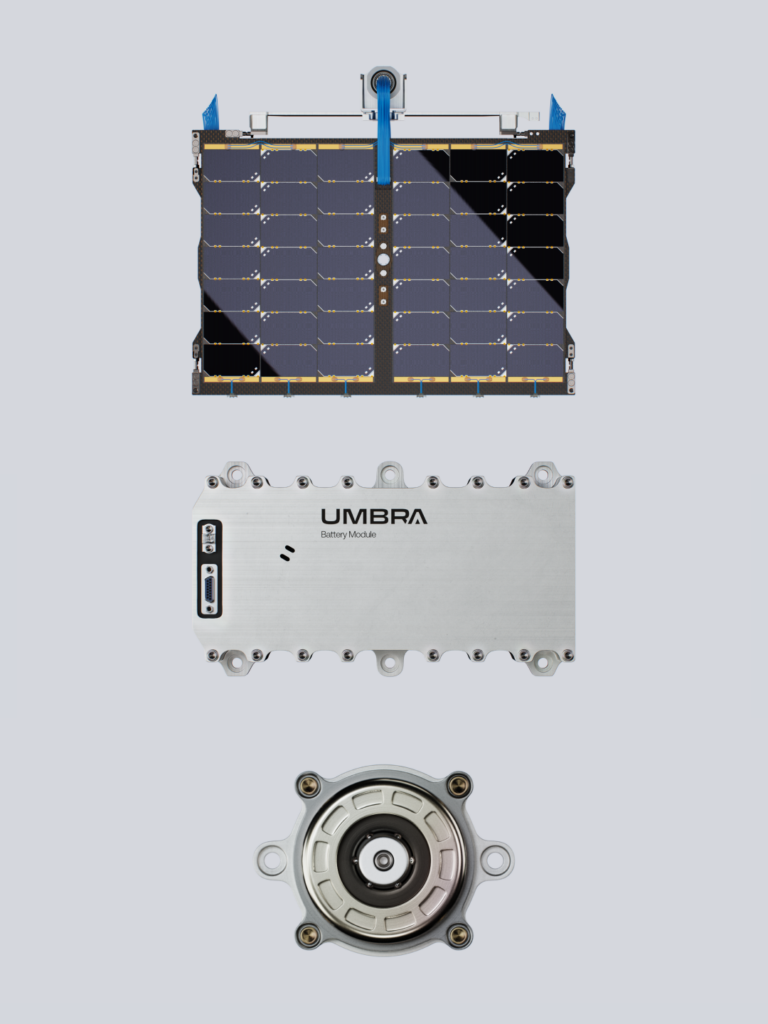

Flight-proven lithium-ion battery module for small satellites, available in 8S1P (125 Wh) and 8S2P (250 Wh) configurations.
Umbra Battery Module (8S1P/8S2P)
Flight-proven lithium-ion battery module for small satellites, available in 8S1P (125 Wh) and 8S2P (250 Wh) configurations.
Description
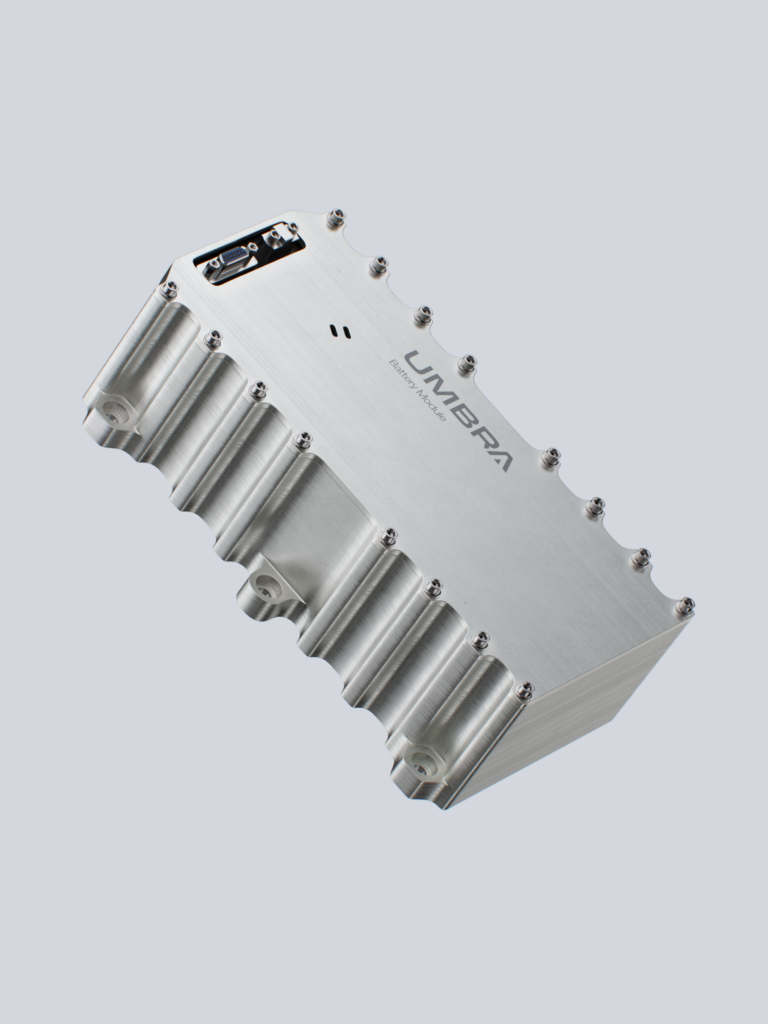
The Umbra Battery Module delivers reliable, high-energy-density power storage for demanding space missions. These flight-proven modules come in 8S1P (8-cell) and 8S2P (16-cell) configurations, featuring built-in cell balancing, integrated thermal regulation (onboard heater and temperature sensor), and a ruggedized design. Certified to UN 38.3 for safe transportation and compliant with NASA-STD-8719.14C debris mitigation requirements, they ensure safe, dependable operation. Flight heritage on Umbra 1-12 and compatibility with the complete Umbra Integrated System provide mission-ready confidence.
Specifications
| Battery Voltage Range | 22 V to 31 V |
|---|---|
| Battery Voltage Nominal | 28 V |
| Chemistry | Lithium Ion |
| Nameplate Energy Capacity (8S1P) | 125 Wh (4.25 Ah) |
| Nameplate Energy Capacity (8S2P) | 250 Wh (8.5 Ah) |
| Maximum Discharge Rate (8S1P) | 15 A |
| Maximum Discharge Rate (8S2P) | 20 A |
| Max Dimensions (8S1P) | L 7.13 in x W 4.04 in x H 1.43 in |
| Max Dimensions (8S2P) | L 7.13 in x W 4.03 in x H 2.50 in |
| Mass (8S1P) | 0.93 kg |
| Mass (8S2P) | 1.46 kg |
| Electrical Interface | Combination D-Sub (2 Power and 5 Signal Contacts) |
| Intended Space Environment | Multi-Orbit |
| Heritage | Flown on Umbra 1-12 |
| Design Life | 5+ Years |
| Production | Assembled and tested in the USA |
| Random Vibe | Qualified to 14.16 Grms profile enveloping GEVS, Falcon 9, SpaceX Rideshare, and Electron levels |
| Shock | Qualified to 1000g peak profile |
| Operating Temperature | Charge: 10°C to 45°C; Discharge: -20°C to 60°C |
| Survival Temperature | -20°C to 50°C |
| Total Ionizing Dose | Designed to withstand at least 30 krad TID |
| DOT Certification | UN 38.3 (49 CFR §173.185) |
| Debris Mitigation | Meets NASA-STD-8719.14C requirements |