Yuri RPM (Random Positioning Machine)
 Yuri
Yuri
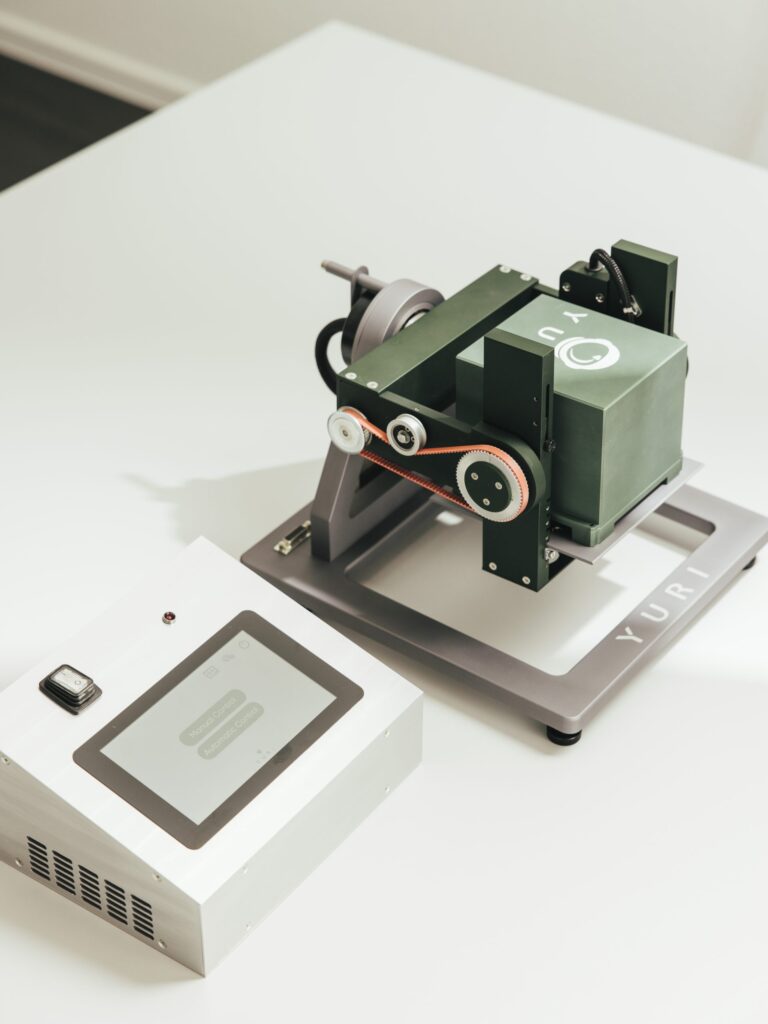
Ground-based Random Positioning Machine (formerly Airbus) that simulates microgravity in 3 dimensions for scientific, educational and industrial applications.
Technical specifications
- Origin
- Formerly Airbus RPM, now Yuri; developed >20 years ago
- Adoption
- Used by more than 60 research groups globally, including NASA and ESA
- Motion modes
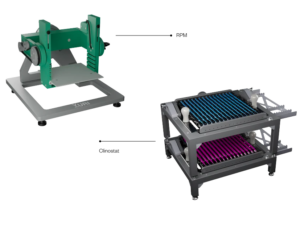
- Clinostat, random, partial-g
- Simulated gravity range
- 10^-3 g to 0.9 g (e.g. Moon or Mars gravity)
- Experiment mass support
- Up to 1.5 kg
- Experiment size support
- < 15 x 15 x 15 cm³
- Mounting platform
- Adjustable in height
- Overall size
- < 38 x 31 x 35 cm³
- Weight
- 7.5 kg
- Compatibility
- Compact design supports use inside incubators (temperature, CO2, RH control) and radiation facilities
- Interfaces
- Integrated power and communication interfaces
- Control
- PC and software included for operation and parameter monitoring (e.g. average g-level)
- Algorithm
- Unique, proven path algorithms with protection against pole bias
About
The Random Positioning Machine (RPM) achieves simulated microgravity by continuously and randomly changing the orientation of an accommodated experiment relative to the Earth’s gravity vector; when the reorientation is faster than the object’s gravitational response, effects similar to real microgravity in space are generated. Originally developed by Airbus more than 20 years ago, the RPM technology and business were acquired by Yuri in 2023. It is a proven asset used by more than 60 research groups worldwide, including NASA and ESA, both as a standalone simulation platform for micro- and partial-gravity experiments and for pre-flight preparation and post-flight analysis of ISS experiments. The RPM works in multiple motion modes (clinostat, random, partial-g) and features a compact design compatible with incubators and radiation facilities.
Documentation
Need the full ICD, test reports or a specific revision? Ask the supplier directly.