S200 Solid Rocket Booster Segments (GSLV Mk III)
 Walchandnagar Industries
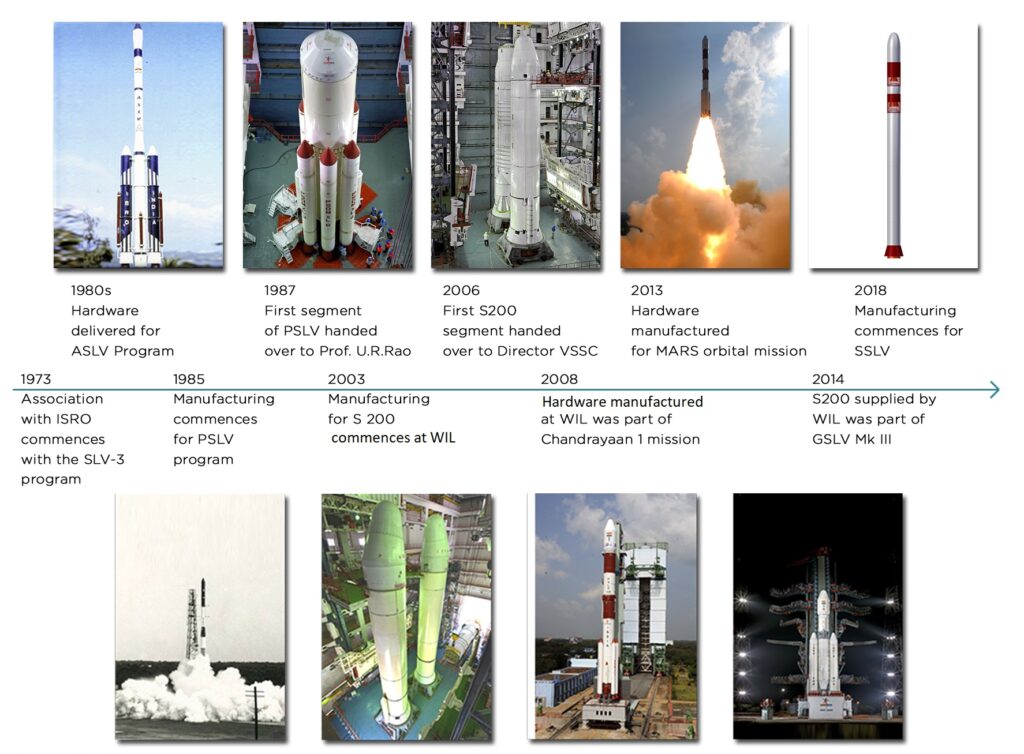
Large-diameter S200 strap-on solid rocket booster segments and nozzle end segments manufactured for ISRO's GSLV Mk III.
Technical specifications
- Application
- Strap-on solid rocket booster segment / Nozzle End Segment (NES), GSLV Mk III (LVM3)
- ISRO designation
- S200
- Units delivered to date
- 16
- Programme heritage
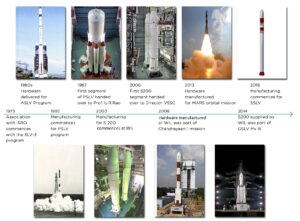
- First segment handed over 2006; S200 hardware in GSLV Mk III from 2014
- Materials
- 15CDV6 alloy steel, high-strength maraging steel, titanium alloys, aluminium alloys
- Manufacturing processes
- Metal forming, metal joining, heat treatment, fabrication, precision machining, pressure testing
- Delivery cadence (per ISRO/VSSC request, 2018)
- ~4 sets of S200 hardware per year
- Customer
- Indian Space Research Organisation (ISRO) / Vikram Sarabhai Space Centre
About
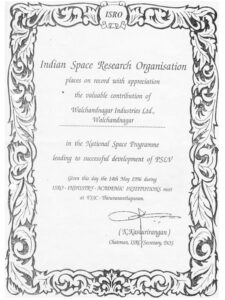
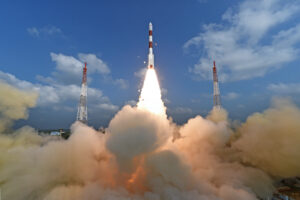
The S200 is the large-diameter solid strap-on booster used in pairs on ISRO’s GSLV Mk III (LVM3) launch vehicle, the rocket that has launched Chandrayaan-2, Chandrayaan-3 and the crewed Gaganyaan test missions. Walchandnagar Industries (WIL) manufactures the S200 rocket motor segments, including the Nozzle End Segments (NES), and has delivered 16 core/strap-on booster units for the GSLV Mk III programme to date; the first S200 segment was handed over to the Director of the Vikram Sarabhai Space Centre in 2006, with S200 hardware supplied by WIL forming part of the GSLV Mk III vehicle from 2014 onward. An August 2018 appreciation letter from ISRO/VSSC’s External Fabrication Activities group to WIL’s Managing Director specifically congratulates the company on completing delivery of an ‘S200 Nozzle End Segment’ (unit NES-09) ahead of schedule for the GSLV Mk III-M1/Chandrayaan-2 mission, and requests an increase in future delivery cadence to about 4 sets of S200 hardware annually. These are among the largest and heaviest rocket motor cases WIL fabricates, requiring aerospace-grade titanium alloys, aluminium alloys and high-strength steel, large-envelope precision machining, welding/joining and heat treatment, plus full-scale pressure testing to ISRO’s stringent quality and safety standards. WIL’s current capacity supports hardware for up to 4 GSLV Mk III flights per year.
Documentation
No public datasheet yet — request the datasheet / ICD from the supplier.