MoI Satellite (Multispectral on-board Intelligence)
 TakeMe2Space
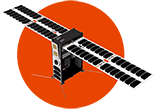
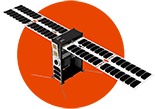
AI-first 6U-class LEO satellite built entirely in-house, carrying a 9-band multispectral imager and 117-150 TOPS edge compute, with RadShield radiation coating for 5+ year LEO life.
Technical specifications
- On-orbit compute (AI Cube)
- 117-150 TOPS
- RAM
- 16 GB
- Imaging system
- 9-band multispectral imager
- Payload power allocation
- 120W
- Peak solar generation
- 67.2W
- Battery capacity
- 200Wh Li-ion
- RadShield TID reduction
- Up to 10x vs. unshielded components
- Component operational life
- 5+ years in LEO
- Communications
- Encrypted S-Band downlink
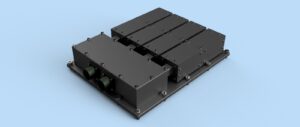
- MOI-TD OBC
- Single-core 1GHz CPU, 512MB RAM
- MOI-TD edge compute
- GC7000 Lite GPU + Edge TPU (4 TOPS)
- MOI-TD OS
- Linux (C/C++ and Python support)
- MOI-TD format
- PC-104
- RadShield substrate
- 2mm thick Aluminium AL 6061
- RadShield coating thicknesses
- 4, 50, 100 microns (tantalum tape)
- Thermal test range
- -25°C to +65°C
- Thermal-vac pressure
- 0.00001 mBar
- MOI-TD launch
- 30 December 2024, PSLV C-60, Sriharikota
- MOI-1 launch
- 12 January 2026, PSLV-C62 (lost — LV failure)
- MOI-1A launch (planned)
- October 2026, California
About
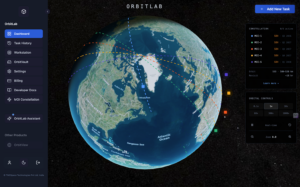
The MoI (Multispectral on-board Intelligence) satellite is TakeMe2Space’s flagship LEO spacecraft, designed and manufactured in-house from bus and subsystems through the AI inference module and imaging payload. It is the hardware backbone of OrbitLab, OrbitVault, and OrbitView services.
A proprietary RadShield tantalum-tape coating on the aluminium structure reduces Total Ionizing Dose by up to 10x, enabling terrestrial-grade electronics to operate for 5+ years in LEO at dramatically lower development cost. On-orbit AI processing via the AI Cube (117-150 TOPS) lets the satellite capture 9-band multispectral imagery, run inference models, and transmit processed results via encrypted S-Band — eliminating the need to downlink raw data and reducing customer processing costs 60-94% versus traditional workflows.
MOI-TD technology demonstrator was launched on PSLV C-60 on 30 December 2024 and declared a mission success on 20 January 2025 after validating all subsystems and more than 20 AI experiments on orbit. MOI-1 was lost on 12 January 2026 in a PSLV-C62 third-stage anomaly; MOI-1A is manifested for an October 2026 launch from California.
Documentation
No public datasheet yet — request the datasheet / ICD from the supplier.