Thermal Blankets for Space Applications (MLI)
 Arquimea
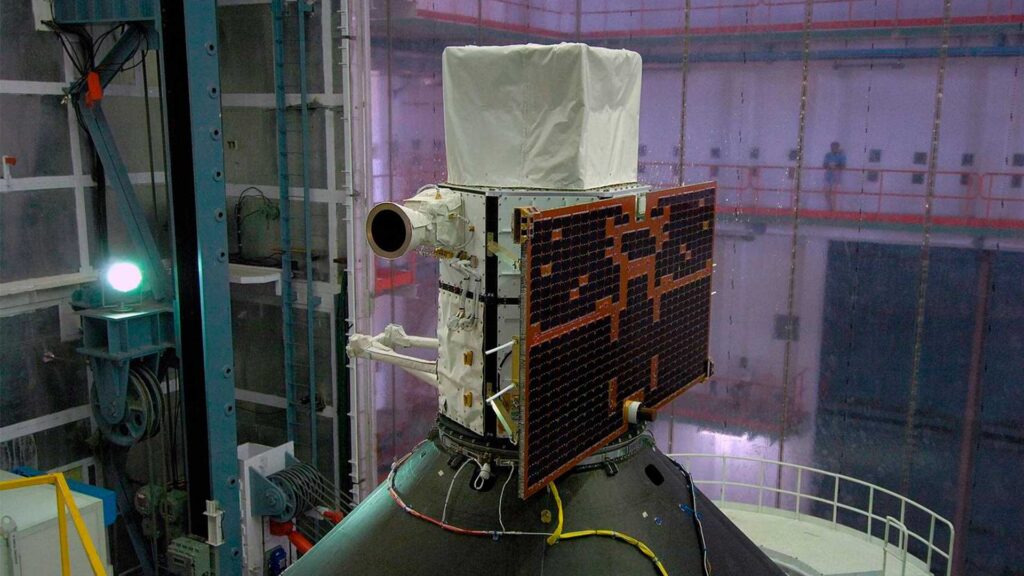
Custom multi-layer insulation (MLI) thermal blankets for spacecraft, covering internal and external applications from cryogenic temperatures down to 20 K through high-temperature environments up to +450°C.
Technical specifications
- MLI types
- Standard plastic MLI, sewn fabric coated MLI, external MLI, internal MLI, SLI, high-temperature MLI, test MLI
- Temperature range — typical
- -150°C to +150°C
- Temperature range — cryogenic
- Down to 20 K
- Temperature range — high temperature
- Up to +450°C
- Materials
- Kapton®, Upilex®, Mylar®, FEP (Teflon)®, Dacron®, Beta Cloth®, Nextel®, glass fiber, Velcro, Vespel SP1
- Cleanroom class
- ISO 8 (100,000 Class) and ISO 5 (100 Class)
- Units in orbit
- 39
- Standards
- ESA, NASA, MIL
About
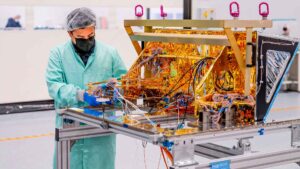
ARQUIMEA designs, manufactures, and commercializes thermal blankets (Multi-Layer Insulation, MLI) for space applications. The company has full capability across the entire production chain — materials procurement, 3D and 2D CAD design using CATIA V4/V5 and/or fit-check approaches, testing, and integration — in ISO 8 (100,000 Class) and ISO 5 (100 Class) cleanrooms, compliant with ESA, NASA, and MIL quality standards.
The blanket product line covers all standard MLI types: standard plastic MLI, sewn-fabric coated MLI, external MLI (with Kapton, Beta Cloth, Coated Teflon), internal MLI (for electronic units, propulsion components, etc.), SLI (Single Layer Insulation), high-temperature MLI, plume impingement shielding (titanium shields), and test MLI. Special external coatings such as Germanium, Beta Cloth, and ITO are also offered.
ARQUIMEA’s thermal blankets have been used in 39 missions currently in orbit with a further 20 awaiting launch. Reference missions include Agile, Galileo, Sentinel 2A, JWST (single-layer cryogenic blankets for the infrared telescope), and Cheops.
Documentation
No public datasheet yet — request the datasheet / ICD from the supplier.