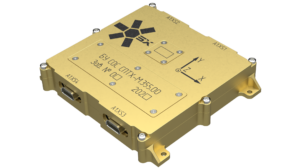
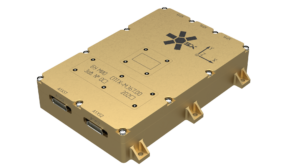
On-board computer (with a set of sensors and ADC controller)
 SPUTNIX
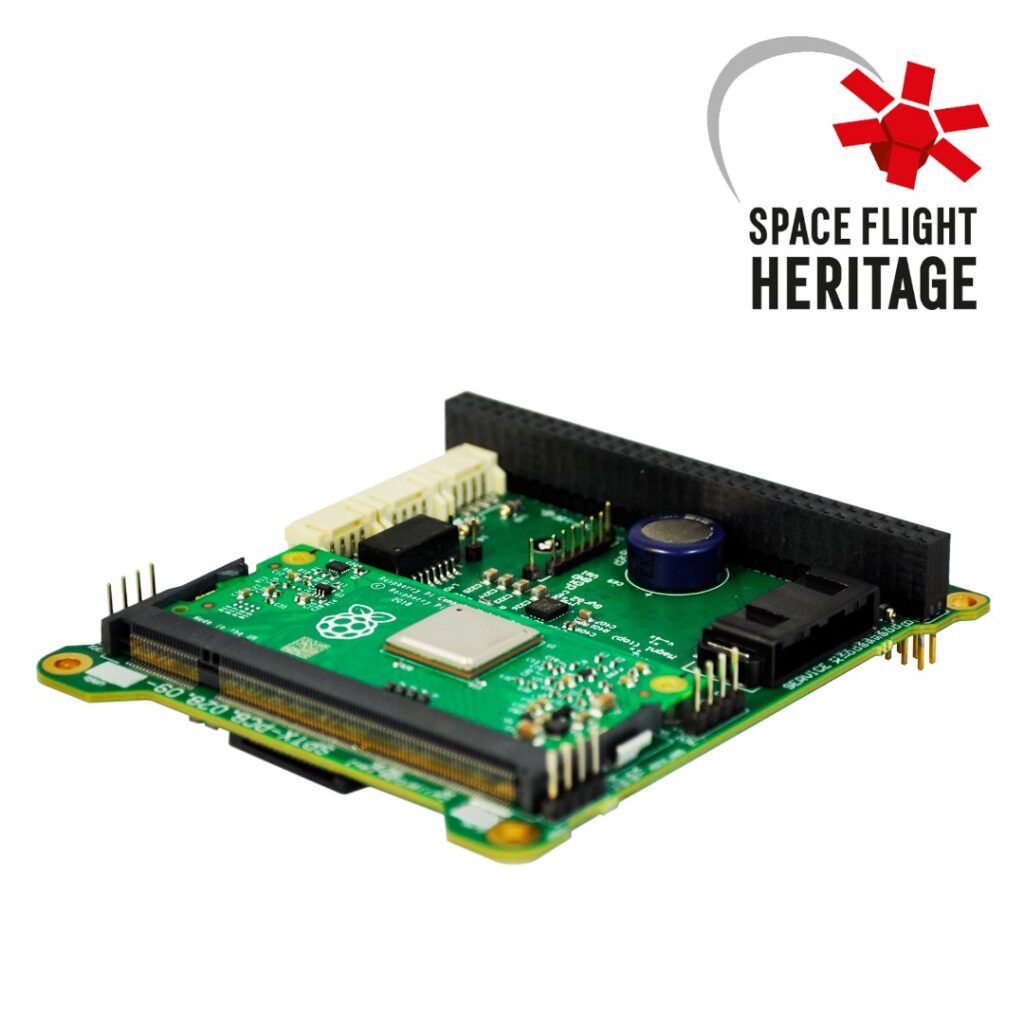
A Raspberry Pi Compute Module carrier board (SXC-MB-04-ADC) integrating an ADCS controller, gyroscope/magnetometer sensors, coil driver and power switching for CubeSats.
Technical specifications
- Model
- SPUTNIX SXC-MB-04-ADC
- Feature
- Flexible architecture, all devices on CAN bus interconnect
- Feature
- Raspberry Compute Module CM3/CM3+
- Feature
- Sensors on CAN bus (magnetometer, attitude rate sensor, temperature, voltages, currents)
- Feature
- EM torquer driver
- Feature
- On-board ADCS controller
- Feature
- Low-power board-managing MCU with autonomous detumbling mode
- Feature
- Bootloaders with in-flight firmware update
- Configuration
- Removable WiFi module
- Configuration
- Raspberry CM3 or CM3+ (default)
- Dimensions
- 84 x 94 x 19 mm (±0.2mm)
- Mass (w/o modules)
- 55 ± 3 g
- Supply voltage
- 5..12 V
- Power consumption, max
- <0.25W (sensors only: ARS, magnetometer, MCU), <0.7W (ADCS controller + onboard sensors), <1.5W (sensors and RPi w/o WiFi)
- Available power supply
- 5V output bus up to 100 mA for USB payloads
- Data interfaces
- CAN2.0B
- Raspberry
- Camera I/F, UART, I2C, SPI (2 CS), USB-HS, 10Mbit Ethernet
- Debug
- Raspberry removable WiFi, USB, video output
- Raspberry CM3 hardware
- not less than 8GB Flash (up to 32GB), 1GB SDRAM
- Raspberry CM3 software
- API for CAN bus, code samples, program loader
- Low-power MCU
- attitude rate sensor, magnetometers, EM-torquer driver, detumbling mode, bootloader
- ADCS MCU
- ADCS control, bootloader
- Power switch
- 3 channels up to 600mA each
- EM torquer driver
- 3 channels up to 500mA each
- Self telemetry
- power voltages/currents, coil voltages/currents, magnetometer, angular velocity, temperature
- Operating temperature range
- -30...+50°C (0..+50°C recommended for Raspberry)
- Storage temperature
- -40...+60°C
- Mechanical vibration
- 10g (request full test report)
- Mechanical shock
- 50g (request full test report)
About
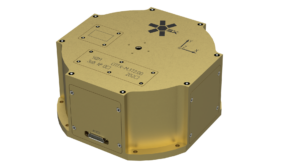
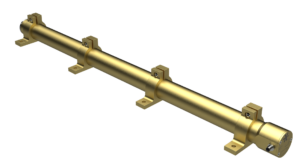
The SPUTNIX computer board SXC-MB-04-ADC represents a Raspberry-Pi Compute Module carrier that contains a set of devices: a standalone ADCS controller; gyroscope and magnetometer sensors; an electromagnetic coils driver unit; a temperature sensor; a real-time clock with backup power; a power subsystem with a 3-channel switch; and a main computer slot with a Raspberry Pi compute module and periphery. All onboard devices, including the Raspberry CM, are accessible on a CAN bus. The main computer slot supports both Raspberry Pi CM3 and CM3+ modules (CM3+ is the default). Additional Raspberry interfaces available on the PC/104 connector include 10 Mbit/s Ethernet, USB 2.0 High-Speed, SPI with double chip select, I2C, UART, and a CAN bus with separate power for external sun sensors. A native Raspberry-Pi camera connector is on the carrier board for remote photo sensing development. A removable WiFi hotspot/client module and video output are available for easy development access. When 3-axis ADCS is used, up to six sun sensors plus an additional magnetometer/attitude rate sensor module can be connected directly to the carrier board, with the on-board ADCS MCU running appropriate tasks autonomously via CAN. A separate low-power MCU provides CAN interface for sensors and manages onboard systems, and can autonomously run a detumbling algorithm using the electromagnetic torquer driver. The flexible hierarchy of OBC controllers provides optimal power consumption for different scenarios: low-power MCU-only mode for energy harvesting, ADCS controller for pointing mode, and the Raspberry Pi for payload operations. Every programmable device has a bootloader with in-flight reprogramming; firmware for the LP-MCU and ADCS controller is manufacturer-provided, while the RPi CM3+ software (Linux-based) can be modified by the customer for payloads.
Documentation
No public datasheet yet — request the datasheet / ICD from the supplier.