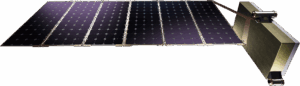
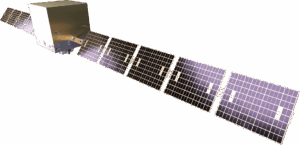
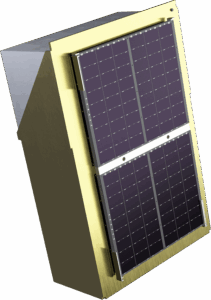
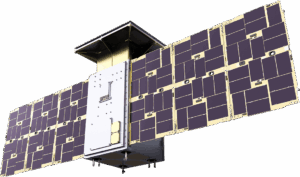
Tyvak / Terran Orbital Nebula
 Tyvak (part of Terran Orbital/Lockheed)
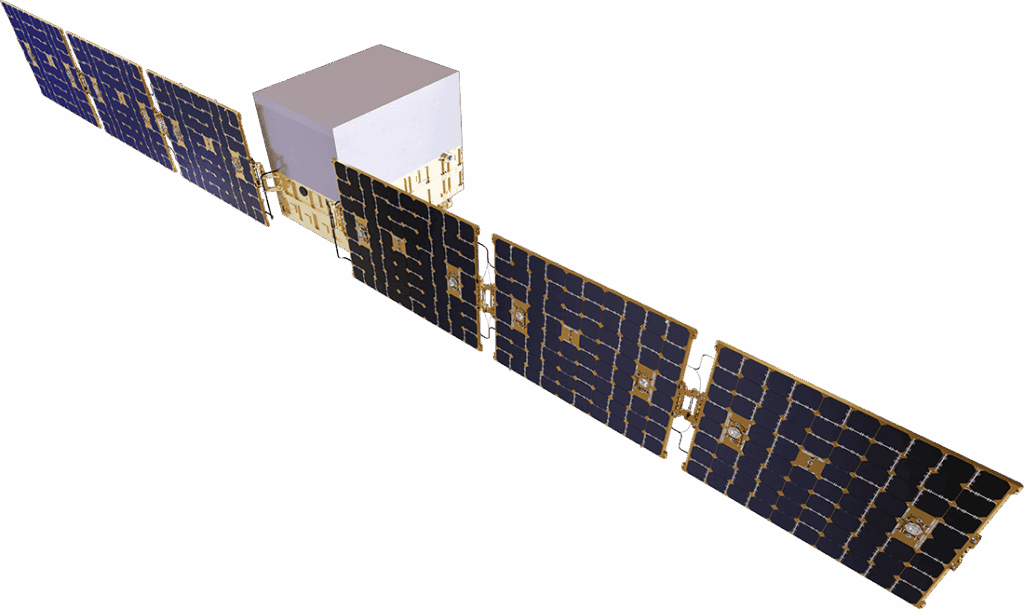
Constellation-grade ESPA/ESPA-Grande microsatellite bus with optional Type 1 encryption, successor to the Zuma bus used on SDA Tranche 0.
Technical specifications
- Configuration
- ESPA or ESPA Grande
- Applications
- LEO
- Native Orbits
- 400km - 1200km
- Launch Mass (Wet, max)
- Up to 250kg
- Available Payload Mass
- Up to 130kg
- Max Solar Array Power
- 1kW (3rd-party solar array included)
- Redundancy
- Dual-string
- Power System
- 66V system power; 28V, 12V, 9V rails available for payload
- Communication Data Rate
- S-band: 125 Kbps uplink, 2 Mbps downlink; X-band: 650 Mbps downlink
- Propulsion
- 2150s Hall-effect standard, options available
- Thrust
- 1.1 mN
- Dimensions (without solar panels)
- 82cm x 58cm x 39cm
- Pointing Accuracy
- 10 to 50 arcseconds, higher accuracy available
About
Nebula comes with Terran Orbital’s standard microsat EPS architecture and builds on the entire product line of satellite buses and common modules for avionics and GNC algorithms. The reaction wheels on this platform are sized to allow the spacecraft to maintain agility, and the bus is designed from the ground up to be compatible with rideshare requirements. Nebula supports commercially available custom payloads and easily accommodates those with odd shapes. It includes a propulsion system ideal for phasing a constellation into its mission orbit, station keeping, and disposal. The previous-generation Nebula bus, called Zuma, was used to fulfill the bus requirement for the Space Development Agency’s Tranche 0 Transport Layer.
Key benefits: flexible launch configuration on 15-inch ESPA or 24-inch ESPA Grande (or equivalent); optional Type 1 encryption (DoD/Intel); open deck plan allows easy accommodation of oddly shaped payloads.
Baseline modules included: Flight Computers (2), Watchdog Backplane, 66V Battery Modules (8-12), 66V MPPT (2), 66V Load Controller, 28V High/Low Power Point of Load (varies), Coarse Sensors (4), Gyro Assembly, Star Trackers (3), GPS (2), Magnetorquers (3), Reaction Wheels (4), LDRR (2), MDR (2).
Documentation
Need the full ICD, test reports or a specific revision? Ask the supplier directly.