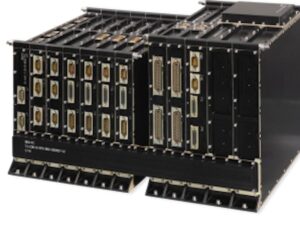
ST Engineering Spacecraft On-Board Computer (OBC)
 ST Engineering Satellite Systems
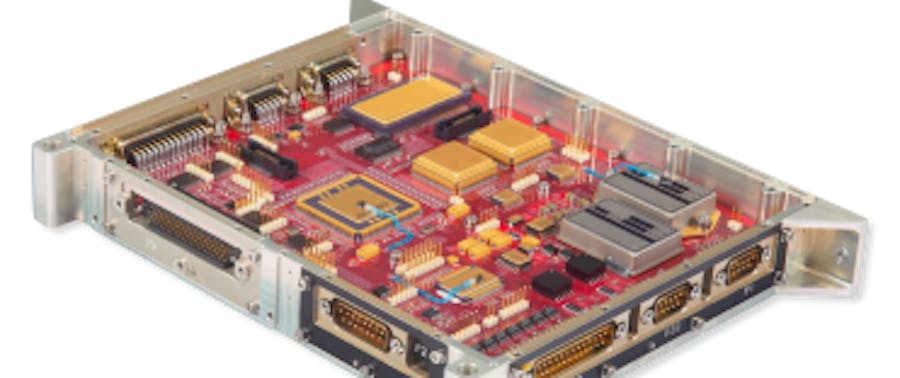
Radiation-tolerant dual-core LEON3-FT on-board computer for reliable LEO satellite data handling and platform control.
Technical specifications
- Processor
- Dual-Core LEON3-FT Sparc V8
- System Clock
- 40 MHz (up to 80 MHz)
- FPU
- IEEE-754 compliant, double precision
- Boot Memory
- 2 MB
- Non-Volatile Memory
- 8 MB MRAM
- Operational Memory
- 32 MB SRAM
- Operating Temperature
- -30°C to +70°C
- Timing Synchronization
- 500 us with PPS
- Radiation TID
- > 20 kRAD
- Radiation SEE
- > 43 MeV·cm2/mg
- Expected Lifespan
- > 5 years in LEO
- EMC Compliance
- MIL-STD-461
- CAN
- 2x CAN 2.0, 1 Mbps
- SpaceWire
- 4x SpW, 40 Mbps
- MIL-STD-1553
- 2x MIL-STD-1553B, dual bus with Bus Controller capability
- UART
- 6x RS422, 115.2 Kbps
- TC/TM
- 2x LVDS, 250 Kbps, CCSDS compliant
- PPS
- 2x RS422/LVDS
- Development & Debugging
- JTAG & Ethernet
- Volume
- 215 x 175 x 30 mm3
- Mass
- 0.95 Kg
- Input Voltage
- 16 V to 40 V
- Nominal Power Consumption
- 4.8 W
About
Based on a dual-core LEON3-FT, the On-Board Computer (OBC) provides exceptional processing power and data communication via multiple data buses. Designed to provide reliable data handling and platform control for advanced LEO satellites, the OBC is a radiation-tolerant design with high availability achieved through on-board Fault Detection, Isolation and Recovery (FDIR). It is built around the GR712RC with a Dual-Core LEON3-FT Sparc V8 processor running up to 80 MHz, runs the RTEMS Real Time Operating System (RTOS), and supports on-board data buses including CAN, SpaceWire, MIL-STD-1553B, RS422 UART and PPS. The unit is tolerant to Single Event Effects (SEE) in both operation and storage, is available in a dual redundant hot/warm configuration, and can be paired with a companion FPGA module for AES-256 encryption of the TTC link.
Documentation
Need the full ICD, test reports or a specific revision? Ask the supplier directly.