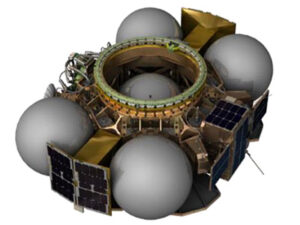
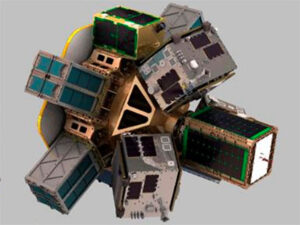
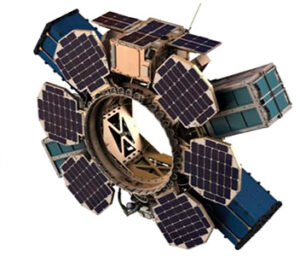
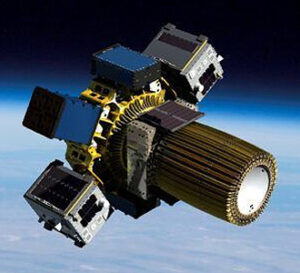
Sherpa-LTC
 Spaceflight Inc
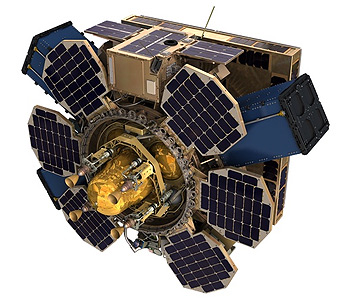
Chemical propulsion OTV with green bipropellant (HTP+IPA), 4×22 N thrusters, and dual-mode operation for rapid orbital transfer.
Technical specifications
- Vehicle type
- Chemical bi-propellant orbital transfer vehicle
- Port interface
- 24" ESPA standard
- Maximum payload capacity
- 300 kg (reconfigurable)
- Propulsion system
- Benchmark Space Systems Polaris (bipropellant)
- Propellants
- HTP (oxidizer) + IPA (fuel) — nontoxic, green
- Thrusters
- 4 × 22 N (88 N combined max thrust)
- Operating modes
- Dual-mode: monopropellant (low-thrust) or bipropellant (high-thrust)
- Pressurant
- Gaseous nitrogen
- Wet mass (LTC-1)
- ~180 kg
- Dry mass (LTC-2)
- ~140 kg
- Designed lifetime
- 2 years
- First flight
- SpaceX Transporter-5 (May 2022)
About
Sherpa-LTC (Low-Earth Orbit Transfer – Chemical) builds on the Sherpa-AC with a nontoxic storable bipropellant chemical propulsion system (Benchmark Space Systems Polaris engine). It uses green propellants: High Test Peroxide (HTP) oxidizer and Isopropyl Alcohol (IPA) fuel — safe to handle and fully REACH-compliant.
The system features 4 × 22 N thrusters (88 N combined maximum thrust) and supports dual-mode operation: low-thrust monopropellant mode or high-thrust bipropellant mode with gaseous nitrogen pressurant. This enables precise orbital maneuvering and rapid transfer to target orbits.
Sherpa-LTC has a wet mass of approximately 180 kg (LTC-1) and a dry mass of approximately 140 kg (LTC-2). Designed lifetime is 2 years. First flight: SpaceX Transporter-5 (May 2022); second mission: SpaceX Transporter-6 (September 2022).
Documentation
No public datasheet yet — request the datasheet / ICD from the supplier.