Skeyeon NEO (Near Earth Orbiter) Satellite Platform
 Skeyeon
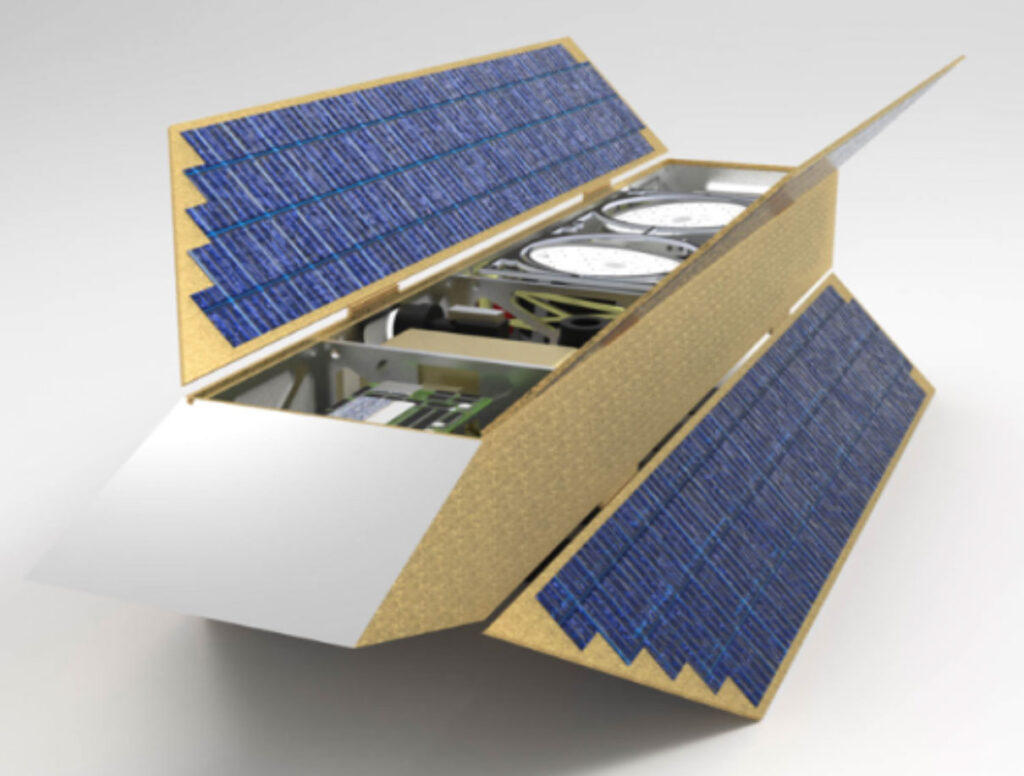
A low-cost Very Low Earth Orbit (VLEO) smallsat platform, flying at roughly 250 km altitude, designed as the scalable building block of a real-time, 1-meter-resolution Earth-monitoring constellation.
Technical specifications
- Orbit altitude
- ~250 km (Near Earth Orbit / VLEO)
- Image resolution
- 1 m
- Telescope volume reduction
- ~25x smaller than comparable space telescopes
- Telescope cost reduction
- 10-50x lower than comparable-performance space telescopes
- Coating drag reduction
- >50%
- End-of-life deorbit time
- within weeks
- Constellation revisit cadence
- daily or better
- Flight heritage
- Pre-launch; no publicly announced flights as of 2026
About
The Skeyeon Near Earth Orbiter (NEO) is the core spacecraft platform behind Skeyeon’s planned Earth-monitoring constellation. Flying at Near Earth Orbit / Very Low Earth Orbit (approximately 250 km altitude), the platform is designed around a compact, low-cross-section form factor that keeps launch mass and cost low while enabling high-resolution imaging.
The platform integrates four patented core technologies. A Concentric Folded Lens Telescope uses folded optics to deliver 1-meter ground resolution while reducing the telescope’s physical volume by roughly 25x and its cost by 10-50x compared to conventional space telescopes of similar performance. Near Earth Orbit Enabling Materials, a patented low-drag, self-healing, atomic-oxygen-resistant coating developed and lab-tested with university partners, reduces atmospheric drag by more than 50% and protects the spacecraft from atomic-oxygen erosion at VLEO altitudes. A Phased Array High-Bandwidth Link provides a patented radio downlink architecture that borrows from cellular/5G phased-array infrastructure concepts to enable low-latency, high-bandwidth, direct data delivery. Finally, the Low Cost Platform design philosophy emphasizes minimal mass, power and form factor to keep unit and launch costs low enough to support constellation-scale production.
A distinguishing feature of the NEO platform is its orbital lifecycle: because it flies at very low altitude, the spacecraft naturally deorbits and burns up within weeks of end-of-life, which Skeyeon markets as a ‘self-cleaning orbit’ that minimizes long-term space debris and collision risk, in contrast to satellites in higher, longer-lived orbits.
Skeyeon’s business model envisions the NEO constellation generating daily (or better) revisit imagery, building a time-lapse image repository, and supporting both commercial services (real-time image viewing, data fusion with drone/terrestrial sources) and a planned consumer subscription offering. As of this listing, Skeyeon has not publicly announced any flight launches; its verifiable milestones to date are seven issued US patents (the most recent granted February 2026) covering the spacecraft architecture, coatings, and downlink technologies described above.
Documentation
Need the full ICD, test reports or a specific revision? Ask the supplier directly.