Spectrum
 Isar Aerospace
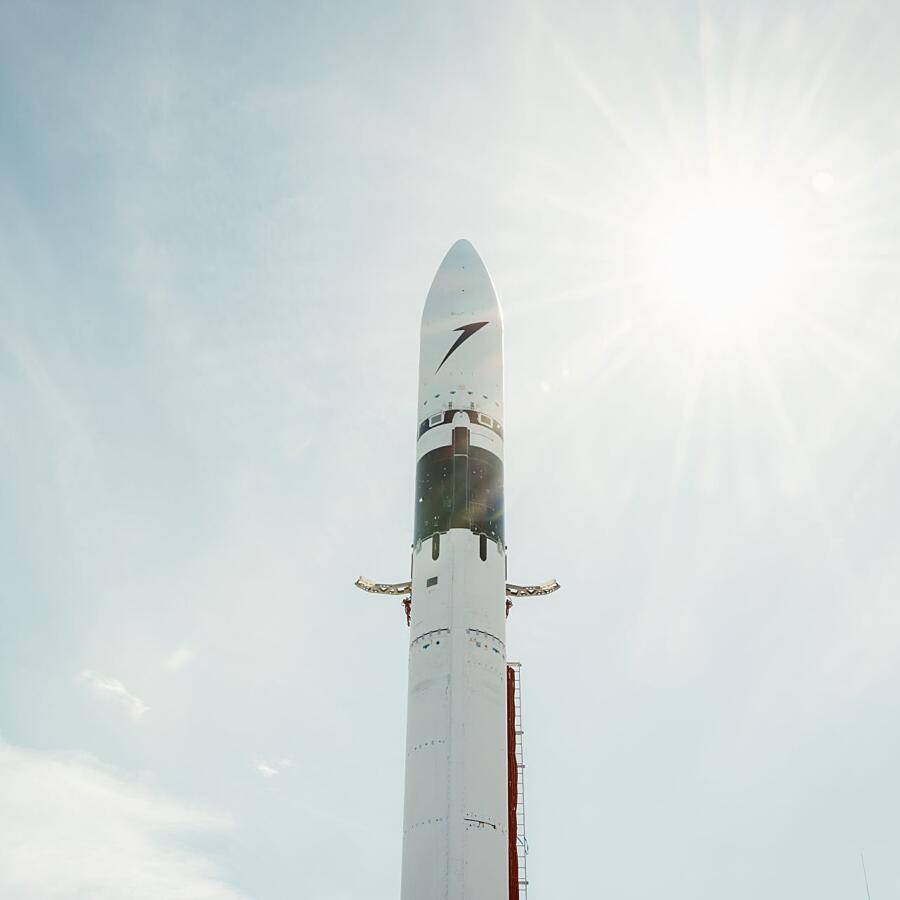
Spectrum is Isar Aerospace's two-stage orbital launch vehicle designed to deliver small and medium satellites to LEO and SSO from Europe.
Technical specifications
- Height
- 28 m
- Diameter
- 2 m
- Stages
- 2
- First stage engines
- 9x Aquila
- Second stage engines
- 1x Aquila (multi-ignition, restartable)
- Engine propellants
- Liquid oxygen / propane
- Engine thrust
- ~75 kN per Aquila engine (sea level)
- Payload to LEO
- 1,000 kg
- Payload to SSO
- 700 kg
- Structure
- Single-part automated carbon-composite airframe
- Launch site
- Andøya Spaceport, Norway
- Flight heritage
- 1 launch (30 March 2025, 'Going Full Spectrum'): lost attitude control ~18-30 seconds after liftoff due to an unexpected vent valve opening; flight terminated. Second flight repeatedly delayed through 2026, targeted for late July 2026.
About
Spectrum is a 28-meter-tall, 2-meter-diameter two-stage orbital launch vehicle developed and manufactured in-house by German New Space company Isar Aerospace. The first stage is powered by nine Aquila engines while the second stage uses a single Aquila engine with a multi-ignition system enabling shutdown and restart in flight. Aquila is an in-house-designed, high-pressure turbopump-fed engine burning liquid oxygen and propane, producing roughly 75 kN of thrust each at sea level. The rocket’s airframe is built from a single-part, automated carbon-composite structure. Spectrum targets the small and medium satellite and constellation launch market at a target cost of around €10,000 per kilogram. Spectrum’s maiden flight (‘Going Full Spectrum’) lifted off from Andøya Spaceport in Norway on 30 March 2025; the vehicle lost attitude control about 18-30 seconds into flight after a vent valve opened unexpectedly, and flight termination was triggered, with the rocket falling into the sea near the pad. The company treated the flight as a successful data-gathering test of ground infrastructure and stage-1 propulsion. A second flight, dubbed ‘Onward and Upward’ and carrying Spectrum’s first customer payloads, was repeatedly delayed through 2026, with a launch attempt targeted for late July 2026.
Documentation
No public datasheet yet — request the datasheet / ICD from the supplier.