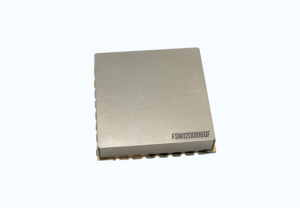
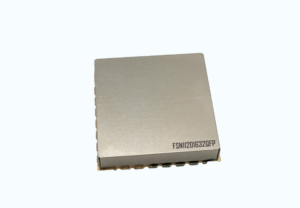
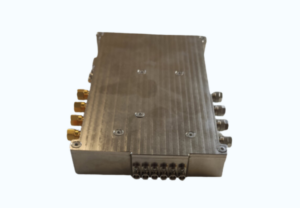
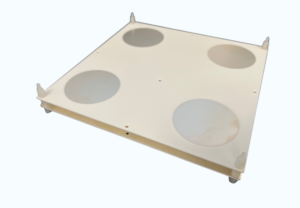
LEOLINK200 Ka-Band High-Capacity Beam Steering Antenna
Arralis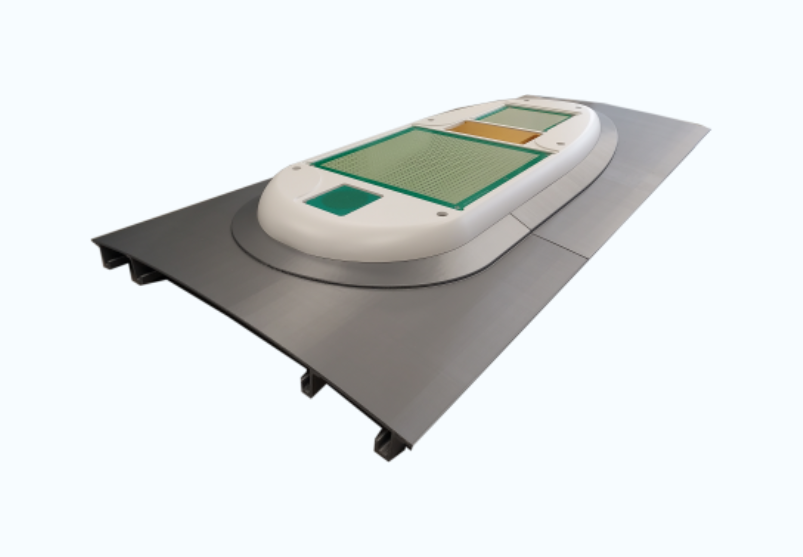
The LEOLINK200 is a 1024-element Ka-band electronically steerable phased array antenna with +/-60 degree scan coverage, TX 27.5-31 GHz and RX 17.7-21.2 GHz, offering high sidelobe suppression for LEO satellite broadband connectivity on aviation, maritime, and mobile platforms.
Technical specifications
- TX Frequency
- 27.5-31 GHz
- RX Frequency
- 17.7-21.2 GHz
- Array Elements
- 1024
- Scan Angle
- +/-60 degrees (azimuth and elevation)
- Polarization
- Circular
- Sidelobe Control
- Complex tapering algorithm
- Profile
- Flat panel, low profile
About
The LEOLINK200 is a large-aperture Ka-band electronically steerable beam phased array antenna featuring 1024 elements, designed for high-capacity LEO satellite communications. It operates with TX at 27.5-31 GHz and RX at 17.7-21.2 GHz, supporting scan angles of +/-60 degrees in both azimuth and elevation across a flat panel form factor suitable for conformal integration on aircraft, ships, and ground vehicles.
The antenna employs complex amplitude tapering algorithms to achieve very high sidelobe suppression, which is essential for compliance with ITU satellite frequency coordination requirements and for multi-satellite coexistence in dense LEO constellation environments. The circular polarization design ensures performance across wide beam scan angles without significant axial ratio degradation.
The LEOLINK200 interfaces directly with any commercial SDR or satellite modem and optionally includes a dedicated control board. It is designed for aviation, maritime, ground mobile, and fixed broadband terminal platforms serving LEO, MEO, and GEO satellites. The higher element count relative to the LEOLINK64 provides substantially greater EIRP and G/T for high-throughput applications such as in-flight connectivity, ship broadband, and enterprise-grade mobile terminals.
Documentation
Need the full ICD, test reports or a specific revision? Ask the supplier directly.