Hall-effect thruster under development that replaces xenon with solid bismuth propellant, targeting up to 3.5x longer missions or extra payload capacity for micro- and small-satellites.
Uvireso Bismuth Hall-Effect Thruster
Hall-effect thruster under development that replaces xenon with solid bismuth propellant, targeting up to 3.5x longer missions or extra payload capacity for micro- and small-satellites.
Description
Uvireso is developing a Hall-effect thruster (HET) that uses bismuth instead of the industry-standard xenon or krypton as propellant. Bismuth is dense, abundant, low-cost and solid at room temperature, which removes the need for high-pressure tanks and valves: the propellant cannot leak or explode during launch or operation, can be cast into any tank shape to suit a given satellite, and is far easier to handle during integration and in-orbit servicing than pressurized noble-gas systems.
Because of bismuth's higher atomic mass and density, the thruster offers an improved thrust-to-power ratio and lets operators trade propellant volume for either extended mission life (up to 3.5x versus xenon) or additional payload mass. The design targets an operating range of 100-500 W with a specific impulse of roughly 1400 s, sized for micro- and small-satellite missions such as collision avoidance, phasing, station-keeping and end-of-life disposal on both LEO and GEO platforms.
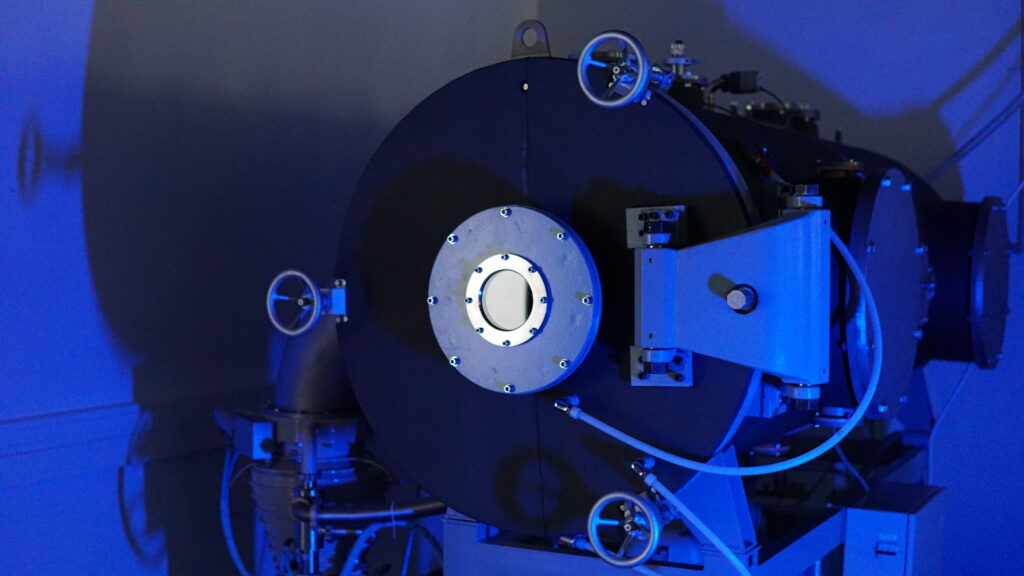
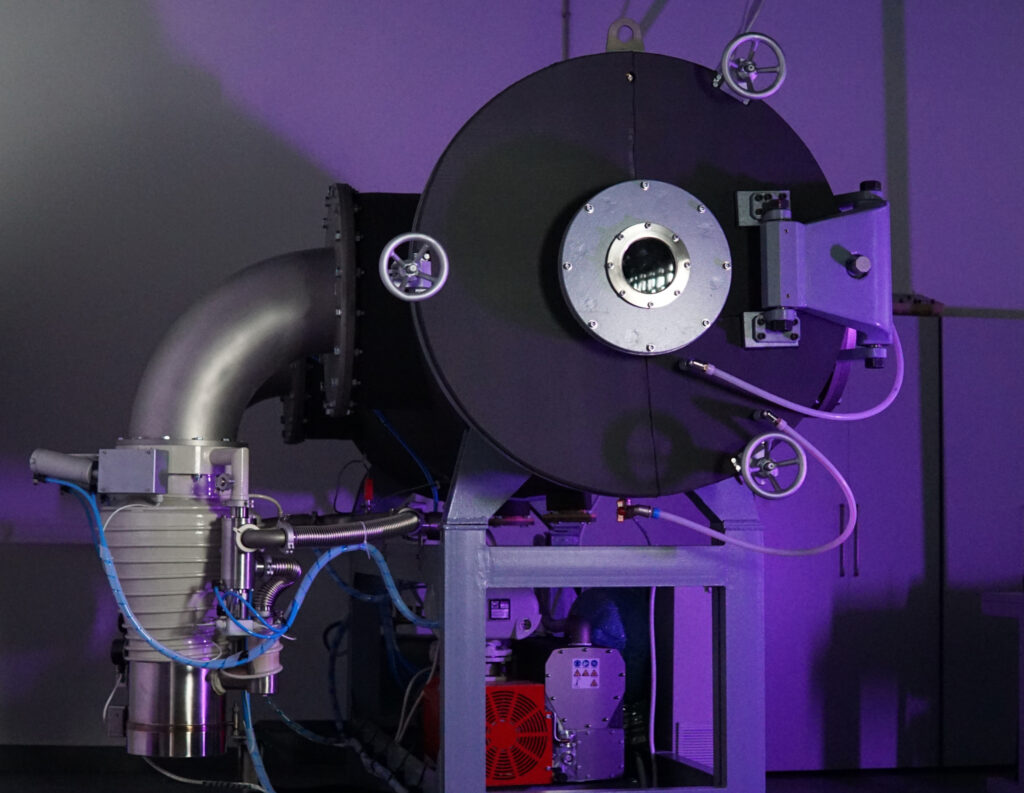
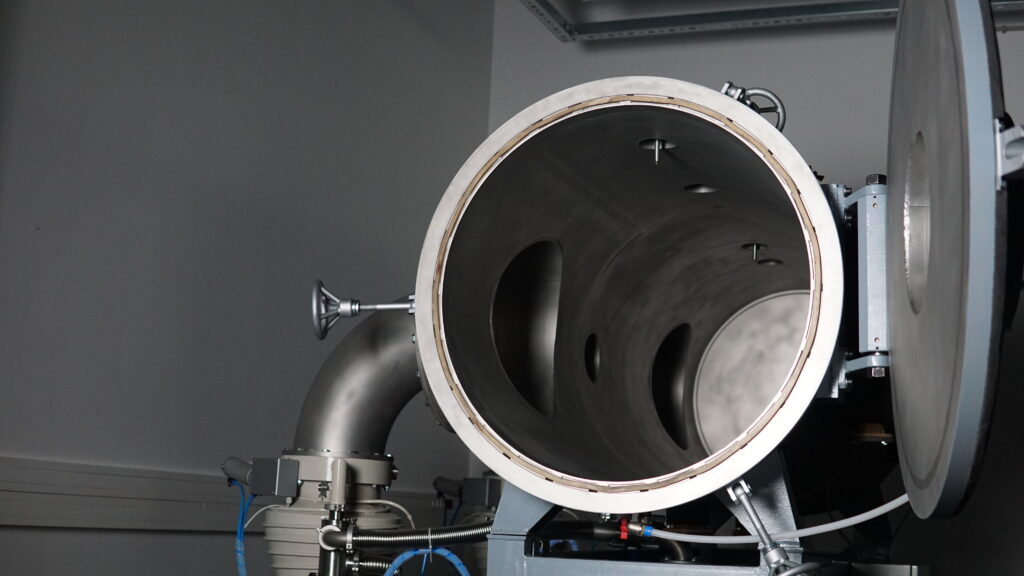
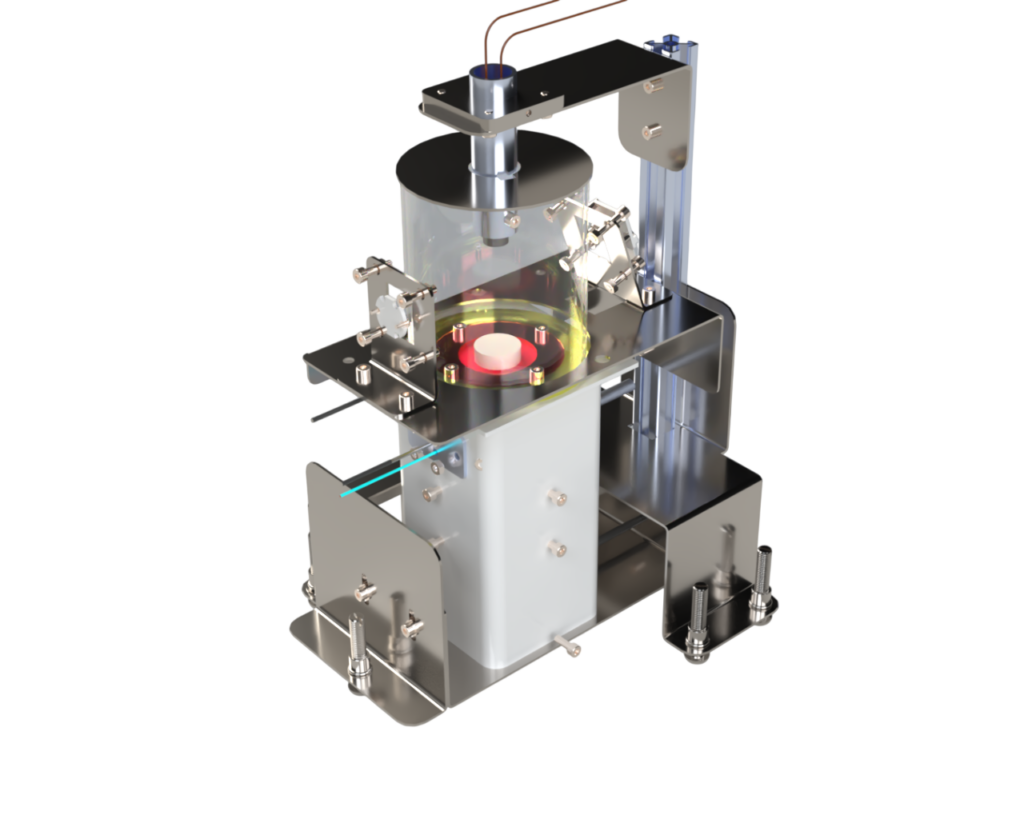
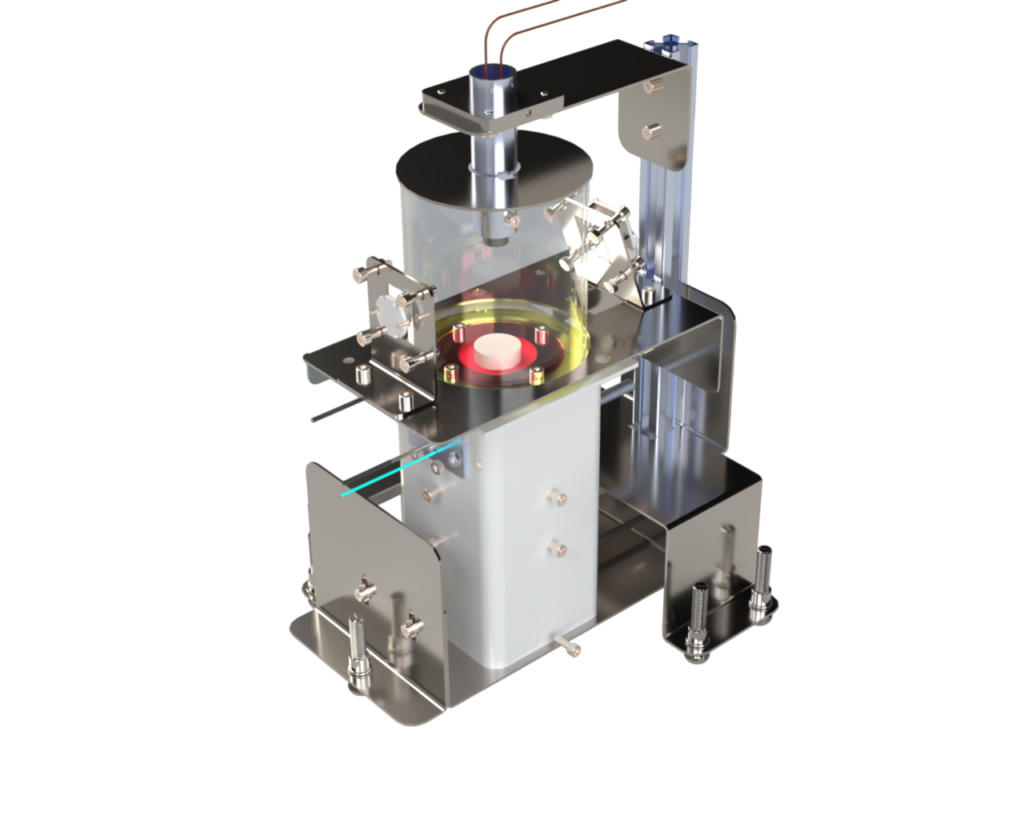
Development work currently spans electric/magnetic topology and plasma-formation simulation, electron gun and electron-transport testing, thruster-channel thermal and anode-flow modelling, and dedicated bismuth wettability and ionization test stands operated in Uvireso's in-house vacuum facility in Vilnius. The company is targeting space qualification of the thruster by 2028 and is seeking satellite integrators and consortia partners for co-development of HET sub-systems.
Specifications
| Propellant | Bismuth (replaces xenon/krypton) |
|---|---|
| Operating power range | 100-500 W |
| Specific impulse | ~1400 s |
| Mission life extension vs. xenon | Up to 3.5x |
| Target satellite class | Micro- and small-satellites |
| Typical use cases | Collision avoidance, phasing, station-keeping, EOL disposal |
| Development status | In development; targeting space qualification by 2028 |