
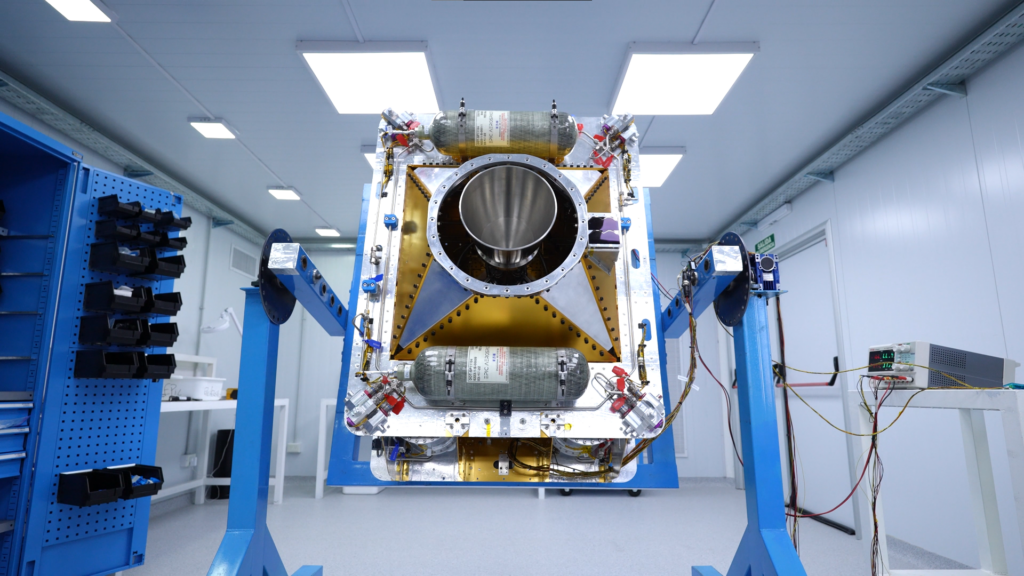
Orbital transfer vehicle for GTO-to-GEO insertion, hosted-payload station-keeping, end-of-life services, and cislunar trans-lunar injection.
Chimera GEO
Orbital transfer vehicle for GTO-to-GEO insertion, hosted-payload station-keeping, end-of-life services, and cislunar trans-lunar injection.

Description
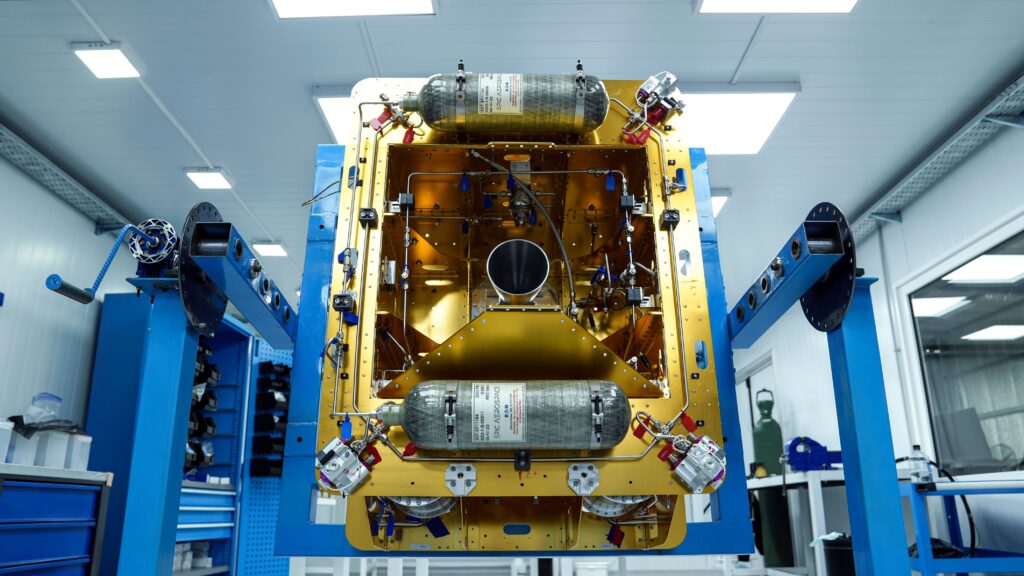
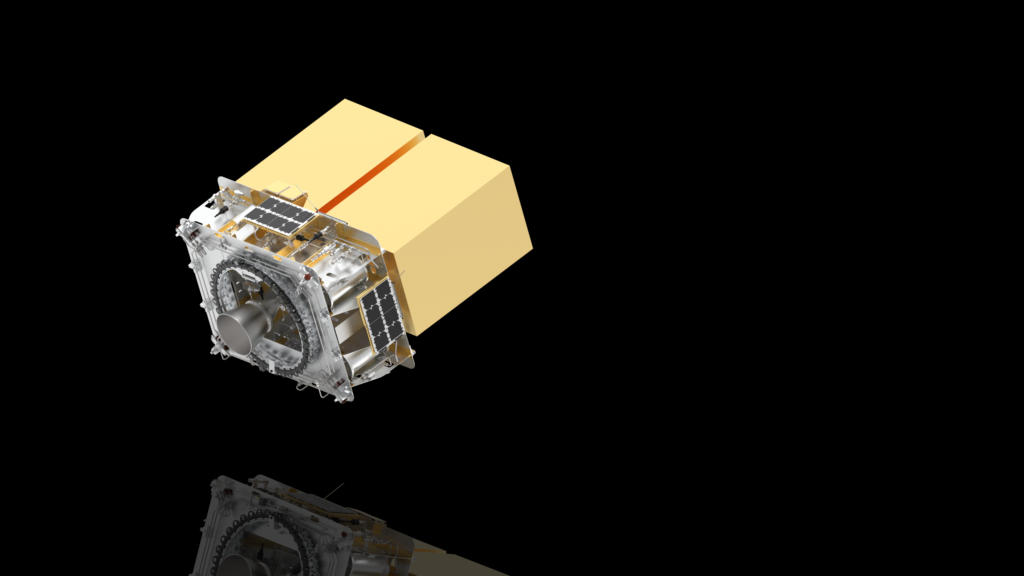
Chimera GEO is Epic Aerospace's orbital transfer vehicle line designed for geostationary and cislunar missions. It performs full geostationary transfer orbit (GTO) to geostationary orbit (GEO) insertion for payloads of up to 2,000 kg in under a month, offering satellite operators an alternative to relying solely on a spacecraft's own apogee engine for GEO insertion.
Beyond insertion, Chimera GEO is designed to support hosted-payload missions, providing station-keeping and end-of-life disposal services for payloads it carries or services on orbit. The vehicle line also targets cislunar transportation, offering trans-lunar injection (TLI) for payloads in the class of NASA's CAPSTONE mission, extending Epic's OTV network beyond Earth orbit toward the Moon.
Like Chimera LEO, Chimera GEO is built on Epic Aerospace's vertically integrated propulsion, structures, and avionics stack, including a non-toxic hypergolic main engine and in-house manufactured high-concentration hydrogen peroxide propellant, reflecting the company's "advanced simplicity" design approach across its vehicle family.
Specifications
| Vehicle type | Orbital transfer vehicle (OTV) / space tug |
|---|---|
| GTO-to-GEO payload capacity | Up to 2,000 kg |
| GTO-to-GEO transfer time | Under 1 month |
| Additional services | Hosted-payload station-keeping and end-of-life disposal |
| Cislunar capability | Trans-lunar injection (TLI) for CAPSTONE-class payloads |
| Propulsion | Non-toxic hypergolic main engine, 900N thrust |
| Propellant | In-house produced 95-98% concentrated hydrogen peroxide |