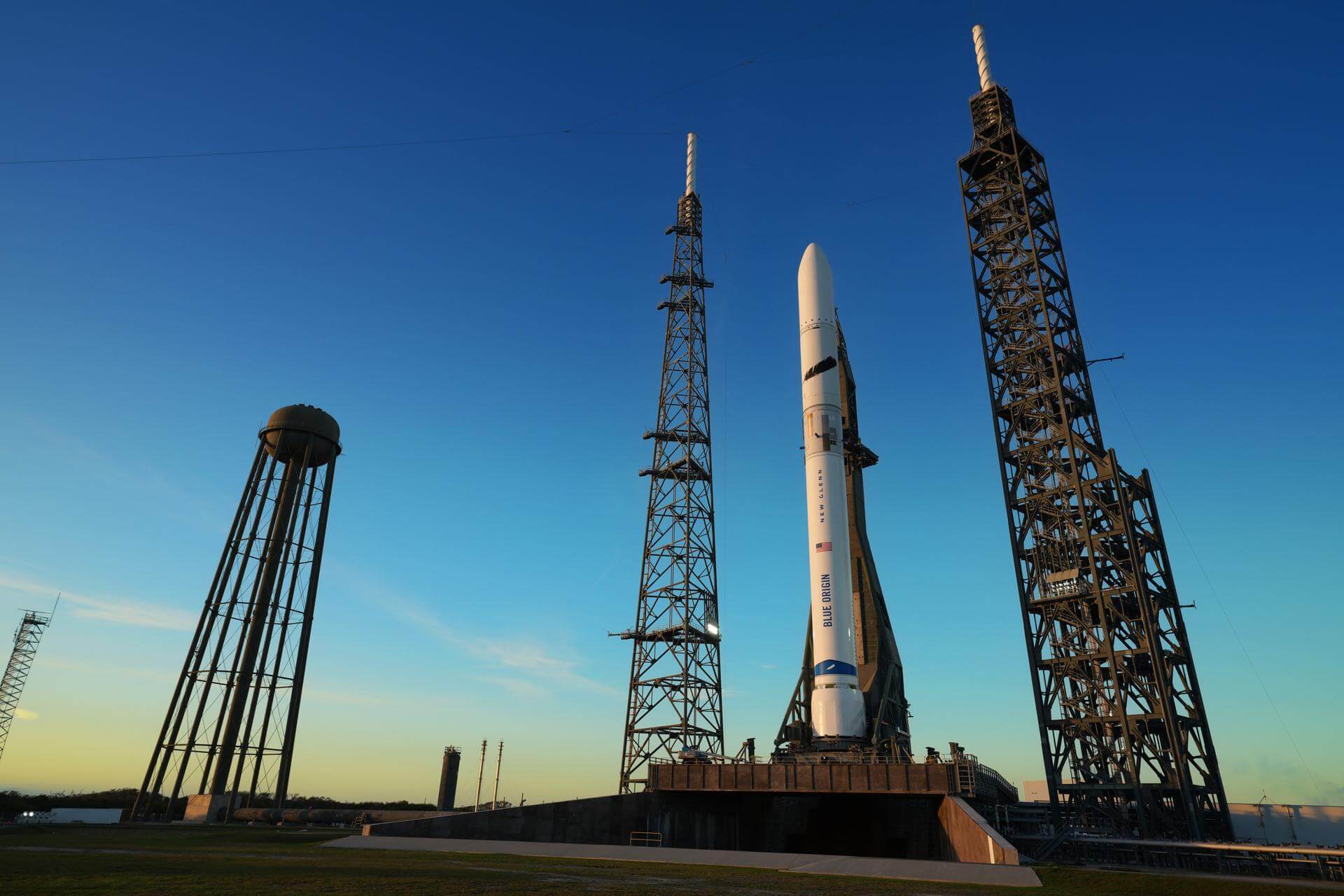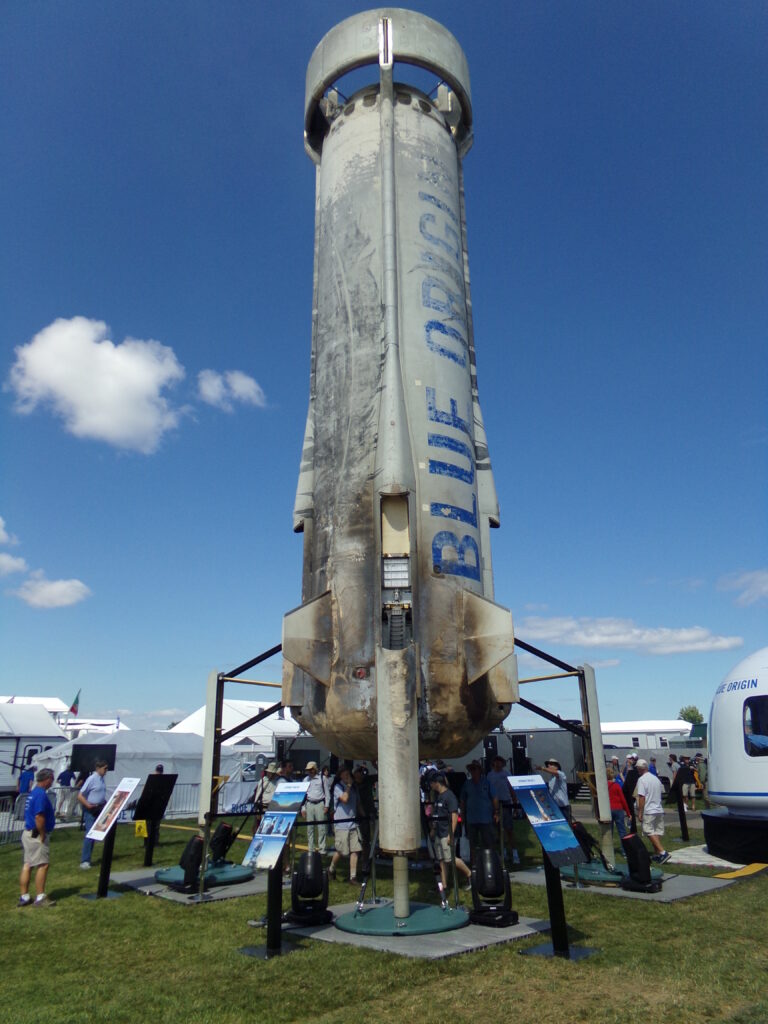


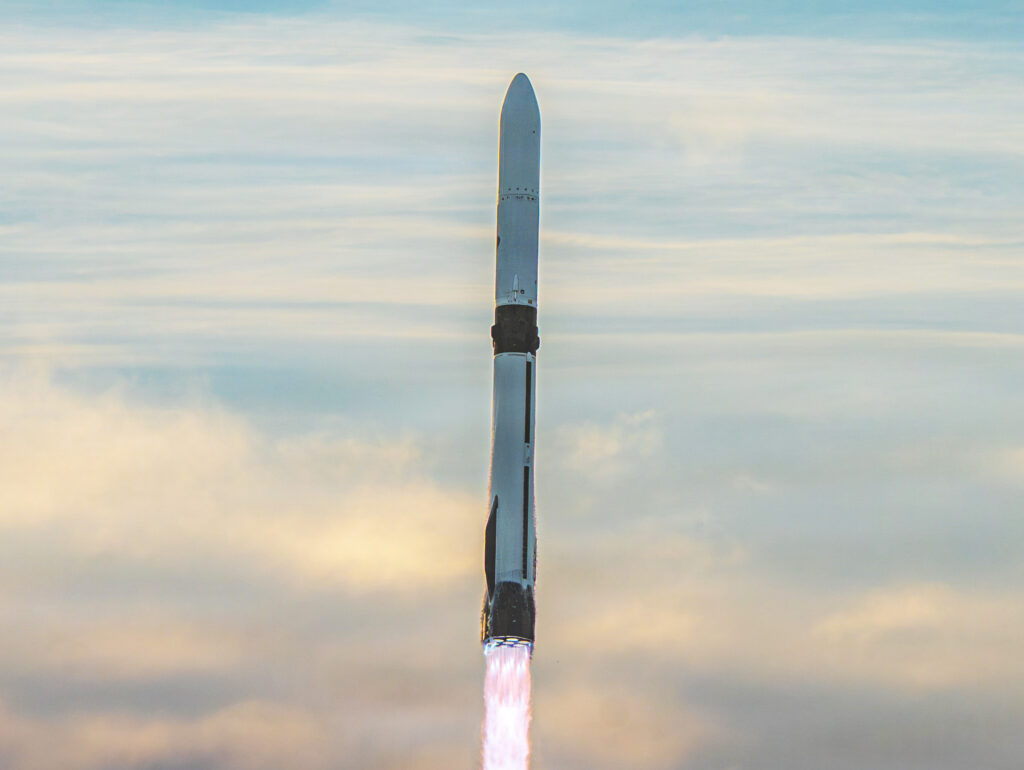
New Glenn is Blue Origin's heavy-lift, partially reusable, two-stage orbital launch vehicle powered by methane-fueled BE-4 engines on its reusable first stage, capable of delivering 45 tonnes to LEO.
New Glenn
New Glenn is Blue Origin's heavy-lift, partially reusable, two-stage orbital launch vehicle powered by methane-fueled BE-4 engines on its reusable first stage, capable of delivering 45 tonnes to LEO.
Description
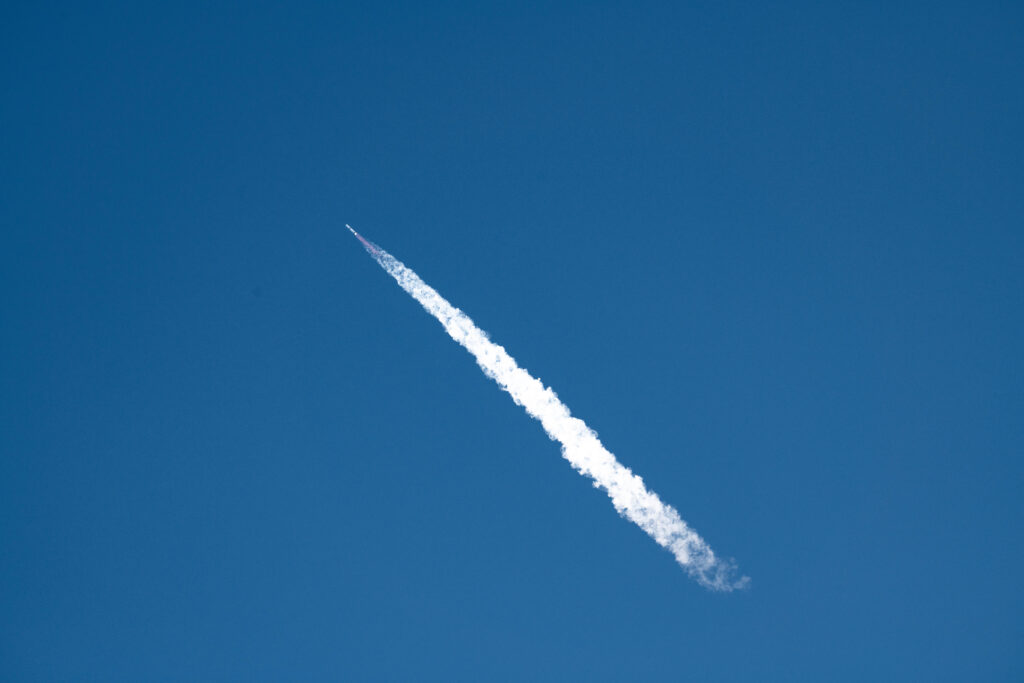
New Glenn is Blue Origin's heavy-lift orbital launch vehicle, named after astronaut John Glenn. It is a two-stage rocket, 7 m in diameter and roughly 98 m tall, designed for commercial satellites, national security payloads, and deep-space missions. The first stage is powered by seven BE-4 engines burning liquefied natural gas and liquid oxygen, generating roughly 17,000 kN of liftoff thrust; it is designed to be reusable for at least 25 flights and lands propulsively on a sea-based landing platform vessel named 'Jacklyn.' The second stage uses two hydrolox BE-3U engines and is expendable. New Glenn can deliver approximately 45,000 kg to LEO and roughly 13,000-13,600 kg to GTO. Flight heritage: New Glenn's maiden flight, NG-1, launched January 16, 2025, successfully placing the Blue Ring Pathfinder payload into orbit, but the first-stage booster was lost during descent. The second flight, NG-2, launched November 13, 2025, carrying NASA's twin ESCAPADE Mars probes, and achieved New Glenn's first successful booster landing. The third flight, NG-3, launched April 19, 2026, reused the NG-2 booster (landing successfully again), though the mission suffered a payload anomaly when a second-stage engine underperformed.
Specifications
| Height | ~98 m |
|---|---|
| Diameter | 7 m |
| Stages | 2 (reusable first stage, expendable second stage) |
| First stage engines | 7x BE-4 (LNG/LOX methalox) |
| Second stage engines | 2x BE-3U (LH2/LOX hydrolox) |
| First stage liftoff thrust | ~17,000 kN |
| Payload to LEO | 45,000 kg |
| Payload to GTO | 13,000-13,600 kg |
| Reusability | First stage designed for 25+ flights; propulsive landing on sea-based vessel 'Jacklyn' |
| Flight heritage | NG-1 (Jan 16, 2025): payload reached orbit; booster lost during descent. NG-2 (Nov 13, 2025): carried NASA's ESCAPADE Mars mission; first successful booster landing. NG-3 (Apr 19, 2026): reused NG-2 booster, landed successfully again, but a second-stage engine underperformance left the payload in a lower orbit than planned. |