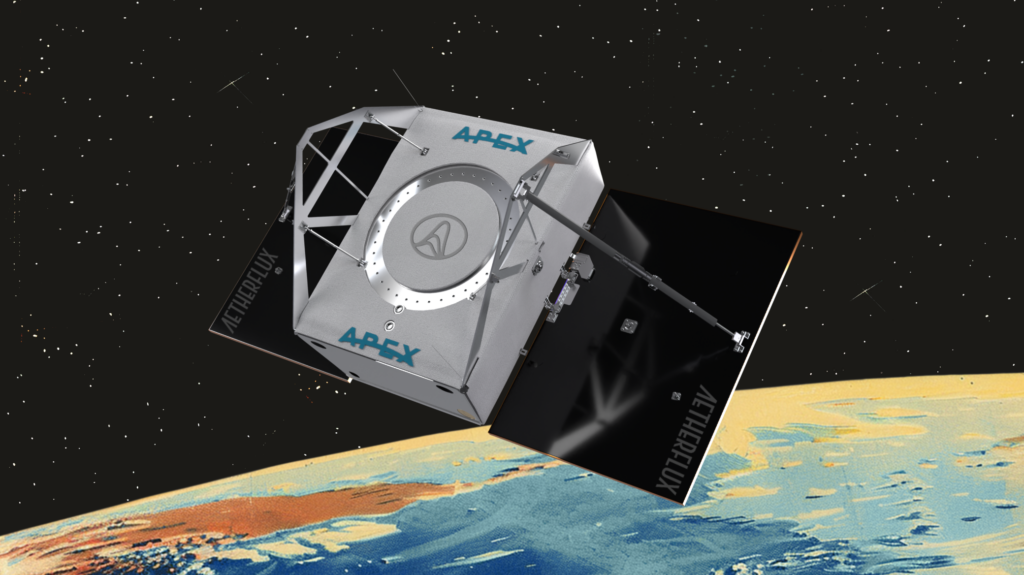
Galactic Brain is Aetherflux's orbital AI compute platform: a constellation of solar-powered LEO satellites providing GPU-class processing in space, bypassing terrestrial energy constraints. The first commercial node targets Q1 2027.
Galactic Brain Orbital Data Center
Galactic Brain is Aetherflux's orbital AI compute platform: a constellation of solar-powered LEO satellites providing GPU-class processing in space, bypassing terrestrial energy constraints. The first commercial node targets Q1 2027.
Description
Galactic Brain is Aetherflux's flagship orbital data center program, announced in December 2025. It represents the company's expansion beyond pure power beaming into in-orbit compute — leveraging continuous solar energy harvesting to power GPU-class workloads directly in space, putting the sunlight next to the silicon and skipping the power grid entirely.
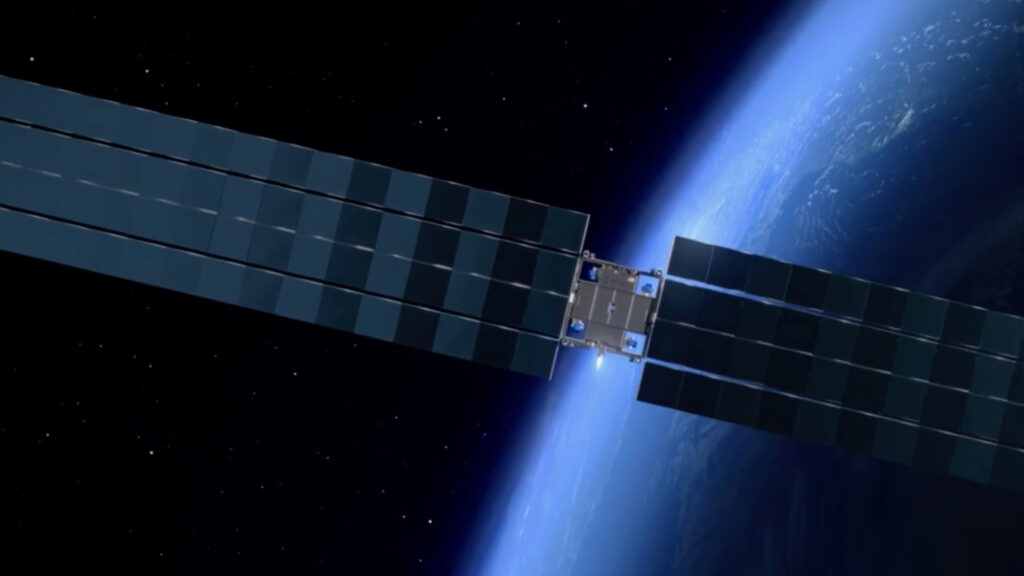
Each Galactic Brain node is a solar-powered compute satellite operating in low Earth orbit. The initial deployment targets teraflop-class compute capability, scaling to petaflop-class constellations as node count grows. The first commercial node is targeted for Q1 2027, with approximately 30 satellites per Falcon 9 launch and 100+ per future Starship launch. Satellites use optical inter-satellite links to deliver multi-gigabit bandwidth with near-constant uptime, while ~500 ms latency makes the system best-suited for AI inference and batch workloads.
The architecture addresses terrestrial data center bottlenecks — land acquisition, utility connections, and grid-dependent power — that typically require 5–8 years to resolve. By contrast, Galactic Brain nodes can be deployed and operational within months. Radiative cooling in the space environment replaces energy-intensive liquid cooling systems used in ground-based data centers.
Specifications
| Orbit | Low Earth Orbit (LEO) |
|---|---|
| First Node Commercial Operation | Q1 2027 |
| Initial Compute Class | Teraflop-class (2027) |
| Scale-up Compute Class | Petaflop-class constellation |
| Connectivity | Multi-gigabit bandwidth via optical inter-satellite links |
| Latency | ~500 ms (suitable for batch/inference workloads) |
| Power Source | Space-based solar power (continuous collection in LEO) |
| Cooling Method | Passive radiative cooling |
| Satellites per Launch (Falcon 9) | ~30 |
| Primary Workload | AI inference and general-purpose GPU compute |