Telesat Lightspeed
 Telesat
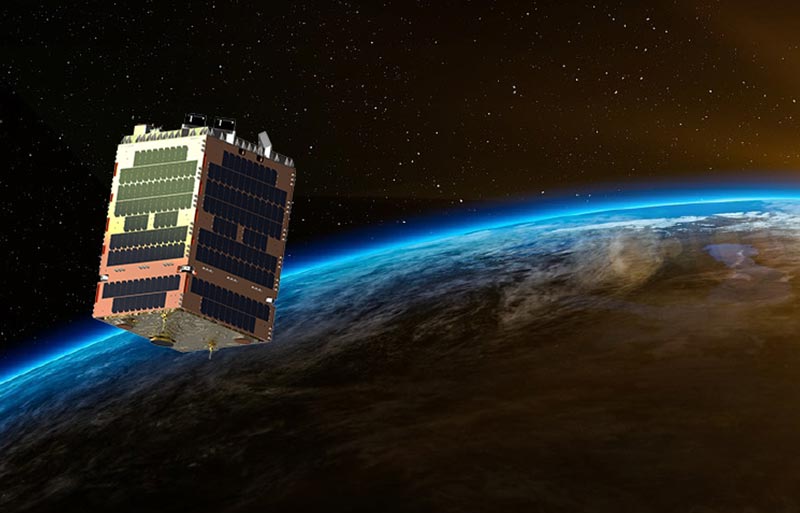
Telesat Lightspeed is a low Earth orbit Ka-band broadband constellation designed to deliver fibre-like, low-latency connectivity worldwide for enterprise, government, and telecom customers.
Technical specifications
- Constellation size (planned total)
- 198 satellites (reduced from original 298)
- Initial operational constellation
- 156 satellites
- Orbital shells
- 78 polar-orbit satellites at ~1,015 km; 120 inclined-orbit satellites at ~1,325 km
- Total constellation capacity
- ~10 Tbps
- Frequency band
- Ka-band commercial, with dedicated Mil-Ka spectrum for government/defense use
- Inter-satellite links
- Optical inter-satellite links enabling mesh routing
- Prime satellite manufacturer
- MDA Space (Quebec, Canada)
- Launch provider
- SpaceX Falcon 9 - 14-launch agreement
- Flight heritage/status (mid-2026)
- No constellation satellites launched as of mid-2026; two Lightspeed Pathfinder satellites targeted for launch around December 2026
- Target global commercial service date
- ~End of Q1 2028
About
Telesat Lightspeed is Telesat’s next-generation LEO broadband satellite constellation, designed to provide high-throughput, low-latency, fibre-like Ka-band connectivity to airlines, maritime operators, energy and resource companies, defense organizations, telecom providers, and governments. The network uses a mesh architecture with optical inter-satellite links for onboard routing, MEF 3.0 Carrier Ethernet certification, and dual Lightspeed Enterprise / Lightspeed Government service tiers. MDA Space is the prime satellite manufacturer, building the constellation at a high-volume facility in Quebec, Canada. As of mid-2026, no Lightspeed satellites have yet reached orbit: Telesat has contracted SpaceX for 14 Falcon 9 launches and is targeting the launch of two Lightspeed Pathfinder satellites around December 2026 to validate performance ahead of serial production launches. The program has undergone schedule and scope changes, including a reduction from an originally planned 298 satellites to 198, and a slip in the target for global commercial service to around the end of Q1 2028, driven partly by delays in SatixFy-supplied ASICs.
Documentation
No public datasheet yet — request the datasheet / ICD from the supplier.