Generic Nanosatellite Bus (GNB)
 Space Flight Laboratory (SFL)
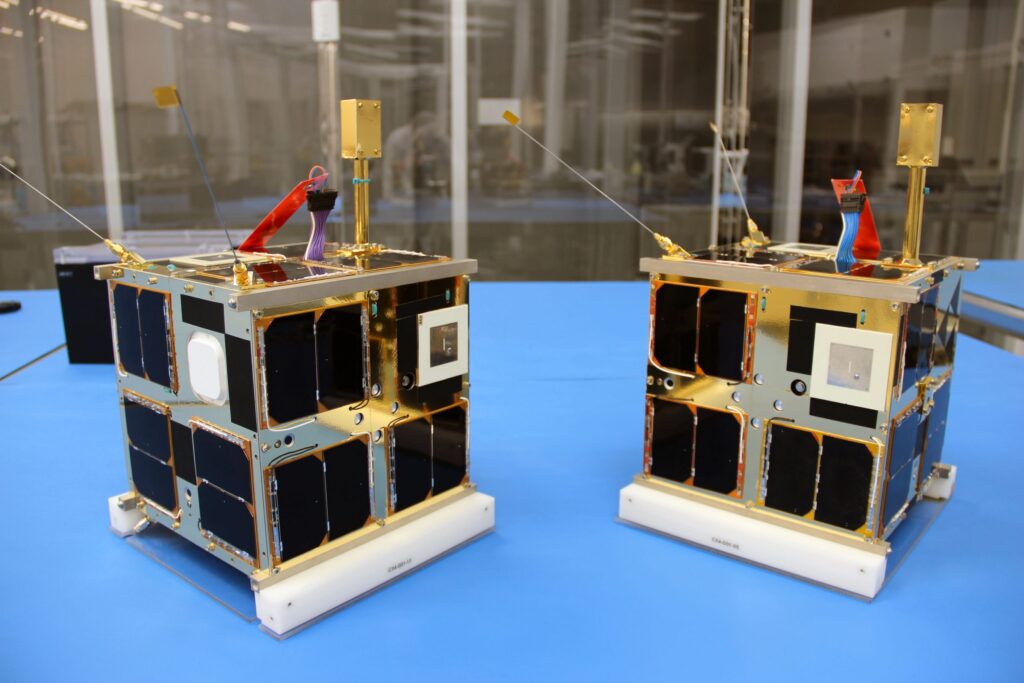
Flight-proven 6.5–7 kg 200mm cube bus — backbone of BRITE Constellation, AISSat, CanX-4/5 and 20+ other missions. Up to 1 arcmin pointing stability, triple-junction GaAs solar cells.
Technical specifications
- Mass
- 6.5–7 kg
- Dimensions
- 200 × 200 × 200 mm
- Solar cells
- Triple-junction GaAs, 26.8% BOL efficiency
- Attitude control
- 3-axis; reaction wheels + magnetorquers
- Pointing stability
- 1 arcmin
- Attitude determination
- 10 arcsec
- Communications
- UHF uplink, S-Band downlink
- TRL
- 9 (flight-proven, 20+ missions)
- Notable missions
- AISSat-1, BRITE (×6), CanX-4/5, NorSat series
About
The Generic Nanosatellite Bus (GNB) is SFL’s entry-level nanosatellite bus, forming the structural and functional backbone of more than 20 missions across space astronomy, AIS ship tracking, and technology demonstration. At 6.5–7 kg with a 200×200×200 mm envelope, it represents SFL’s signature approach: maximum capability within minimum volume at minimum cost.
The GNB features triple-junction gallium arsenide solar cells with 26.8% beginning-of-life efficiency, a 3-axis attitude control system combining reaction wheels and magnetorquers capable of 1 arcminute pointing stability and 10 arcsecond attitude determination, and UHF/S-band communications. Notable missions include AISSat-1 (2010, world’s first AIS nanosatellite), all six BRITE-Constellation satellites (2013–2014, world’s first space astronomy nanosatellite constellation), CanX-4 and CanX-5 (2014, world’s first nanosatellites to demonstrate precision formation flying at sub-meter accuracy).
Documentation
No public datasheet yet — request the datasheet / ICD from the supplier.