Open Orbit
 Open Cosmos
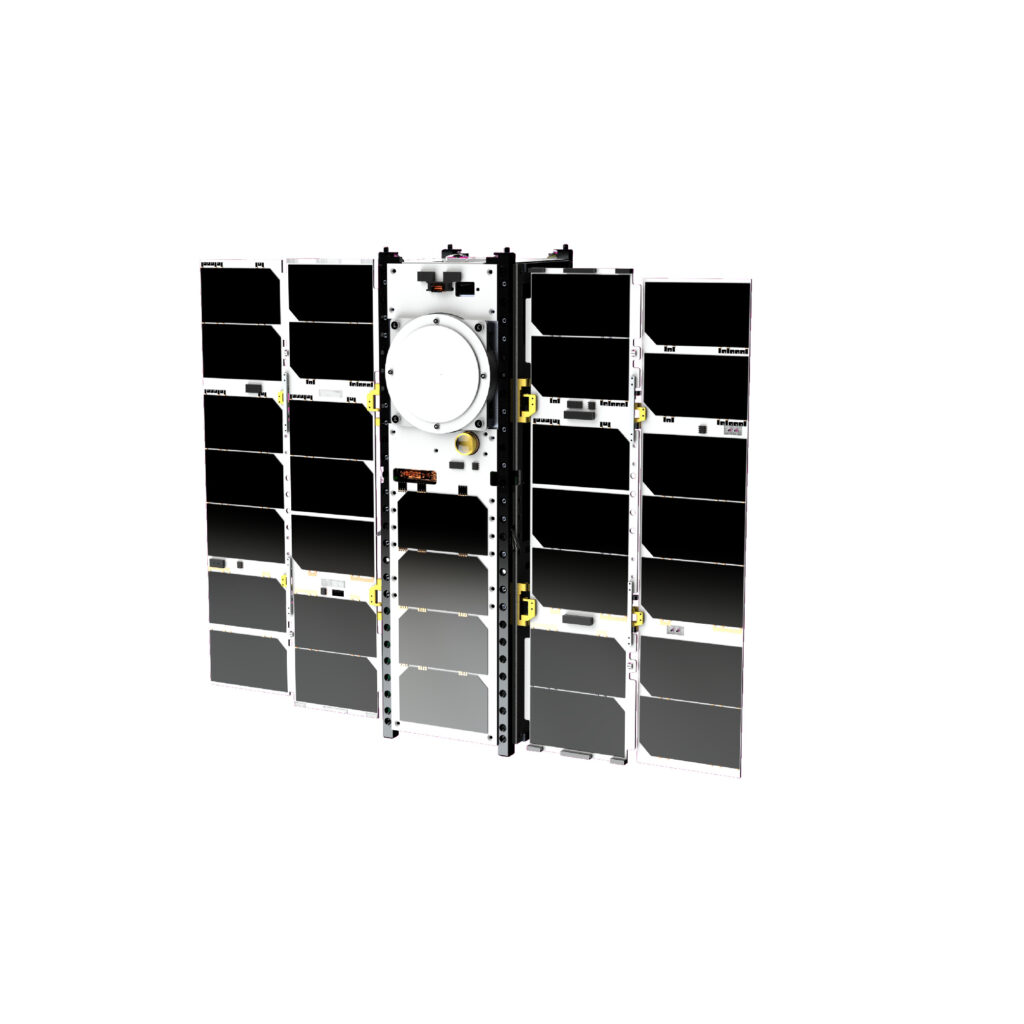
Open Cosmos's end-to-end satellite mission service that designs, builds, tests, launches, and operates small satellites (CubeSats and microsats) for Earth observation, IoT, and communications customers.
Technical specifications
- Bus form factors
- 3U, 6U, 12U, 16U CubeSat, and larger microsatellite variants
- Mission lifecycle coverage
- Design, manufacture, test, launch procurement, insurance, and operations
- Launch site partnerships
- 8 global launch locations
- Reported reliability
- Up to 99.7% uptime across current missions
- Flight heritage
- QB50, Menut, Enxaneta, LS2, ALISIO-1, MANTIS, Phi-Sat-2, and other missions (12+ named missions flown)
About
Open Orbit is Open Cosmos’s flagship end-to-end satellite mission management solution, covering the full lifecycle of a small satellite mission: constellation and mission architecture design, payload integration support, in-house manufacturing and testing, insurance and regulatory compliance, launch procurement across eight global launch site partnerships, and mission operations from Launch and Early Orbit Phase through Initial Operational Capability and eventual disposal. It is built around a modular CubeSat product line (3U, 6U, 12U, and 16U form factors) plus larger microsatellite variants, letting customers pick a bus sized to their payload and budget, with missions starting at roughly £500K. The service targets governments, space agencies, research institutions, and commercial organizations that want rapid, affordable access to space without building in-house satellite engineering teams. Open Cosmos, founded in 2015 in the UK, has flown or delivered more than a dozen missions on this platform, including QB50, Menut (Earth observation for climate change monitoring), Enxaneta (narrowband IoT with Sateliot), LS2 (IoT satellite for Lacuna Space), ALISIO-1 (6U CubeSat with SWIR imager and laser communications), MANTIS (12U CubeSat with onboard machine learning), and Phi-Sat-2 (6U CubeSat demonstrating AI-powered Earth observation for ESA, launched August 2024).
Documentation
No public datasheet yet — request the datasheet / ICD from the supplier.