Zhuque-2
 LandSpace
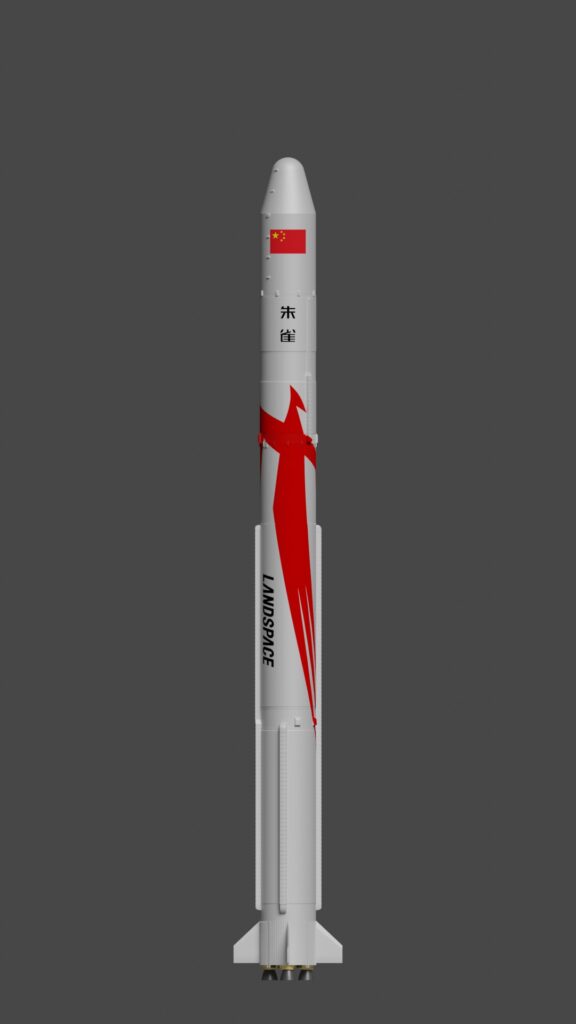
Zhuque-2 (ZQ-2) is a Chinese two-stage, medium-lift orbital launch vehicle developed by LandSpace that became the world's first methane-fueled rocket to reach orbit.
Technical specifications
- Height
- 49.5 m
- Diameter
- 3.35 m
- Liftoff mass
- ~219,000 kg
- Stages
- 2
- Propellant
- Liquid oxygen / liquid methane (methalox)
- First stage engines
- 4x TQ-12 methalox engines, ~2,680 kN total liftoff thrust
- Second stage engines
- 1x TQ-12 vacuum + 1x TQ-11 vernier, ~777.7 kN combined
- Payload to LEO (200 km)
- 4,000 kg
- Payload to SSO (500 km)
- 1,500 kg
- Flight heritage
- 3 flights of base Zhuque-2: 1 failure (14 Dec 2022, debut) and 2 successes (12 Jul 2023 - world's first successful methalox orbital launch; 8 Dec 2023). Successor variant Zhuque-2E has since flown additional missions with further successes and one failure (Aug 2025).
About
Zhuque-2 is a two-stage, liquid oxygen/liquid methane (methalox) orbital launch vehicle developed by the Chinese private aerospace company LandSpace. Standing 49.5 m tall with a 3.35 m core diameter and a liftoff mass of about 219 tonnes, the rocket is powered by four TQ-12 methalox engines on its first stage and a vacuum-optimized TQ-12 engine paired with a TQ-11 vernier thruster on its second stage. Designed to serve the growing commercial small-to-medium satellite launch market, Zhuque-2 targets LEO and SSO missions at lower cost than traditional cryogenic or hypergolic rockets. Its maiden flight on 14 December 2022 reached space but failed to attain orbit after an early shutdown of the second-stage vernier engine. On 12 July 2023, the second flight successfully placed its payload into orbit, making it the first methane-fueled launch vehicle in history to reach orbit. A third successful flight followed on 8 December 2023. LandSpace has since introduced the stretched, higher-thrust Zhuque-2E variant.
Documentation
No public datasheet yet — request the datasheet / ICD from the supplier.