SL1
 HyImpulse Technologies
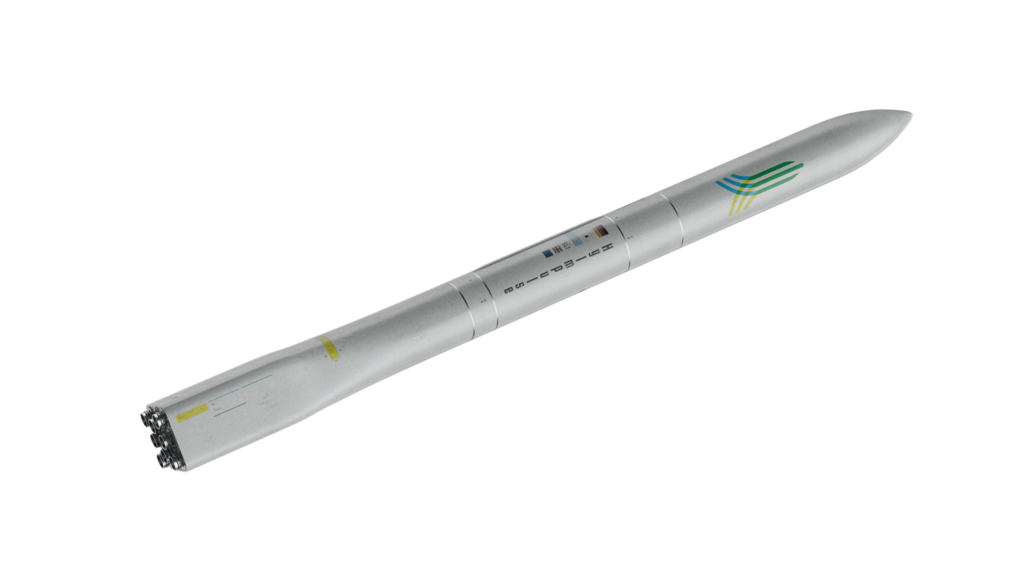
SL1 is HyImpulse Technologies' three-stage small satellite launch vehicle, Europe's first orbital rocket powered entirely by hybrid rocket propulsion using paraffin fuel and liquid oxygen.
Technical specifications
- Stages
- 3 (plus optional HyMOVE kick stage)
- Height
- 33 m
- Diameter
- 2.2 m
- Liftoff mass
- 54 tonnes
- Engine
- HyPLOX 75 hybrid rocket motor (turbopump-fed), paraffin fuel + liquid oxygen oxidizer
- Thrust
- 90 kN
- Payload to LEO
- Up to 600 kg
- Launch cadence (target)
- Up to 12 launches p.a., goal of 50 by 2030
About
SL1 is a three-stage orbital launch vehicle developed by German NewSpace company HyImpulse Technologies, designed to provide affordable, dedicated launches for small satellites. Unlike conventional liquid or solid rockets, all three stages use HyImpulse’s proprietary hybrid rocket motors (HyPLOX 75), which burn paraffin-based solid fuel with liquid oxygen as the oxidizer. Because the solid fuel is already cast into the combustion chamber, the architecture has significantly fewer parts and components than conventional launchers, simplifying manufacturing and enabling rapid, low-cost production and turnaround. The hybrid propulsion approach is also inherently safer, as it cannot sustain a catastrophic explosive failure the way liquid or solid rockets can. SL1 stands 33 meters tall with a 2.2 meter diameter and a liftoff mass of about 54 tonnes, and can deliver up to 600 kg to low Earth orbit at roughly half the cost of comparable dedicated small-launch services. An optional fourth stage/kick stage, HyMOVE, extends mission flexibility for precise orbital insertion. HyImpulse validated its hybrid propulsion technology with the SR75 suborbital sounding rocket, a single-stage, 13 m demonstrator using one HyPLOX-75 engine, which completed its maiden flight from the Koonibba Test Range in South Australia on 3 May 2024, reaching roughly 250 km altitude — the first successful flight of a European paraffin/LOX hybrid rocket. SL1’s orbital debut is targeted for 2026, with HyImpulse aiming to scale up to 12 launches per year initially and as many as 50 per year by 2030.
Documentation
No public datasheet yet — request the datasheet / ICD from the supplier.