HPGP 200N Thruster — High-Performance Green Propellant Propulsion
 Bradford ECAPS
Bradford ECAPS (part of Bradford Space) is a Swedish space propulsion company developing High Performance Green Propellant (HPGP) thrusters using LMP-103S propellant — a non-toxic, high-performance liquid monopropellant based on ammonium dinitramide (ADN). HPGP is an alternative to hydrazine that offers superior specific impulse (Isp of 254 s vs. 220 s for hydrazine), higher density […]
About
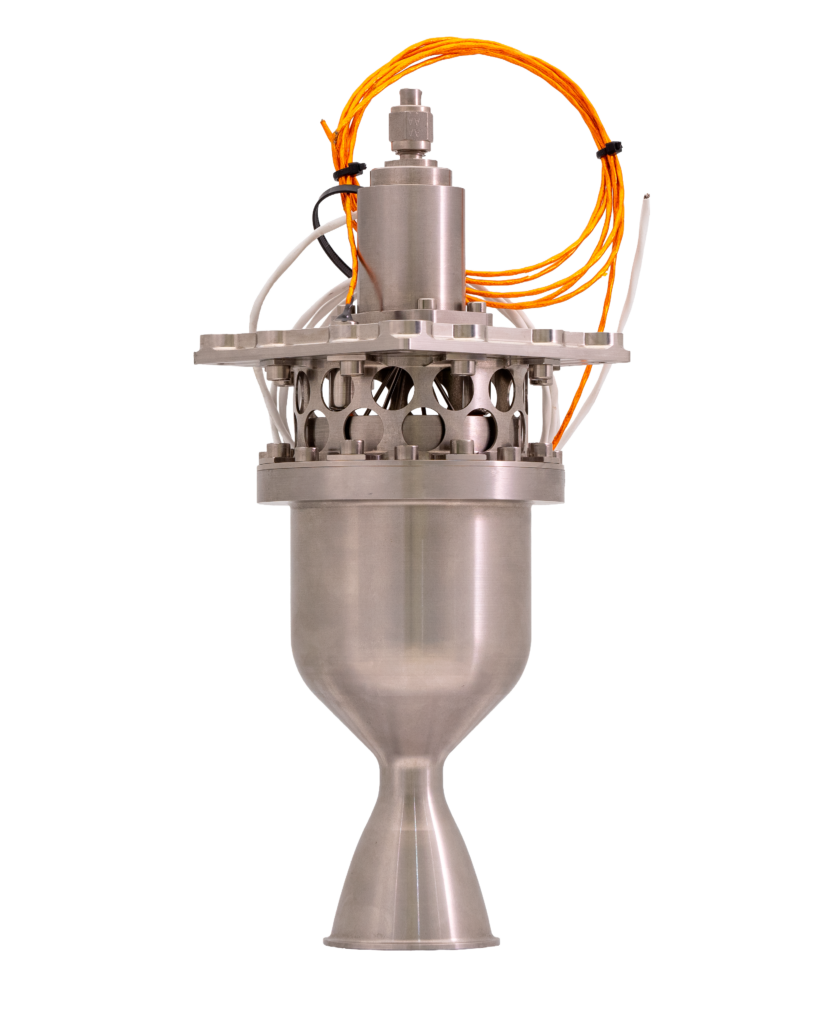
Bradford ECAPS (part of Bradford Space) is a Swedish space propulsion company developing High Performance Green Propellant (HPGP) thrusters using LMP-103S propellant — a non-toxic, high-performance liquid monopropellant based on ammonium dinitramide (ADN). HPGP is an alternative to hydrazine that offers superior specific impulse (Isp of 254 s vs. 220 s for hydrazine), higher density (reducing propellant volume by 30%), and significantly improved safety — LMP-103S is classified as slightly toxic (not highly toxic like hydrazine), reducing handling hazards and launch integration costs. The ECAPS 200N thruster (shown) is the largest in the HPGP family, intended for apogee kick and orbital maneuver applications on medium and large satellites. Smaller thrusters in the family (0.1N, 1N, 22N) are used for attitude control on CubeSats and smallsats. ECAPS’s 1N HPGP thruster flew successfully on the PRISMA spacecraft in 2011 in the first orbital demonstration of green propellant technology. Bradford ECAPS thrusters have since flown on the LRO (Lunar Reconnaissance Orbiter) successor studies, ESA’s MYRIADE and LAPAN-A2 satellites, and NASA’s Lunar Flashlight (2022).
Documentation
No public datasheet yet — request the datasheet / ICD from the supplier.