ABSL Li-ion Space Battery
EnerSys/ABSL Space Products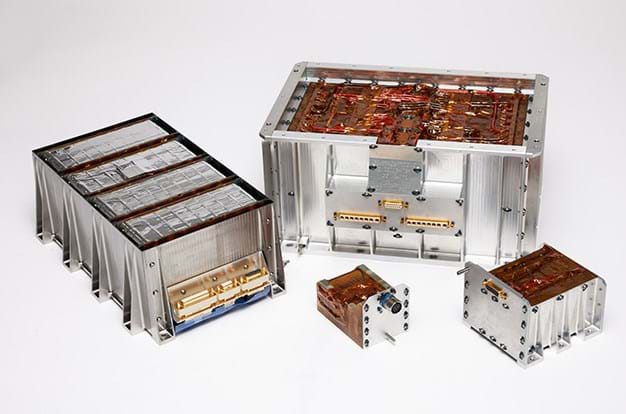
EnerSys ABSL's flagship line of lithium-ion batteries purpose-built for spacecraft, offering configurable capacity, voltage, and power outputs for missions ranging from SmallSats to flagship science and human-rated programs.
Technical specifications
- Chemistry
- Lithium-ion (Li-ion)
- Voltage range
- 12V to 151.2V (model dependent)
- Capacity range
- 2Ah to 80Ah per standard model, larger multi-module up to 448Ah
- Power output range
- 59.2W to 2300W
- Flight heritage
- Flown since 2000 on hundreds of missions including NASA James Webb Space Telescope, NASA Europa Clipper, ESA Proba-1, and ISS deliveries; over 6.5 billion cumulative cell-hours in space without mission failure
- Reliability record
- First Li-ion batteries to orbit Earth, Mars, and Venus; closest spacecraft approach to the Sun
About
The ABSL Li-ion Space Battery is EnerSys ABSL Space Products’ flagship range of rechargeable lithium-ion batteries engineered specifically for the demands of spaceflight. Each battery is built from space-qualified Li-ion cells arranged in series/parallel configurations to deliver custom voltage and capacity combinations, and the batteries undergo rigorous design, structural, and thermal analysis to meet man-rated, high-voltage, and long-life mission requirements. The product range spans small modular packs for SmallSat and CubeSat applications up to large multi-module batteries for cornerstone space agency programs, with voltages from roughly 12V to over 150V and capacities from about 2Ah to 80Ah per standard model. ABSL batteries have flown on hundreds of missions since 2000, becoming the first rechargeable Li-ion batteries flown in space and the first to orbit Earth, Mars, and Venus, as well as achieving the closest solar approach of any spacecraft battery. Flight heritage includes NASA’s James Webb Space Telescope, NASA’s Europa Clipper, ESA’s Proba-1 (the first satellite powered by lithium-ion batteries), and deliveries to the International Space Station, with the fleet logging over 6.5 billion cumulative cell-hours in orbit without a mission failure.
Documentation
No public datasheet yet — request the datasheet / ICD from the supplier.