Crypto3 Cryptographic CubeSat
 Cryptosat
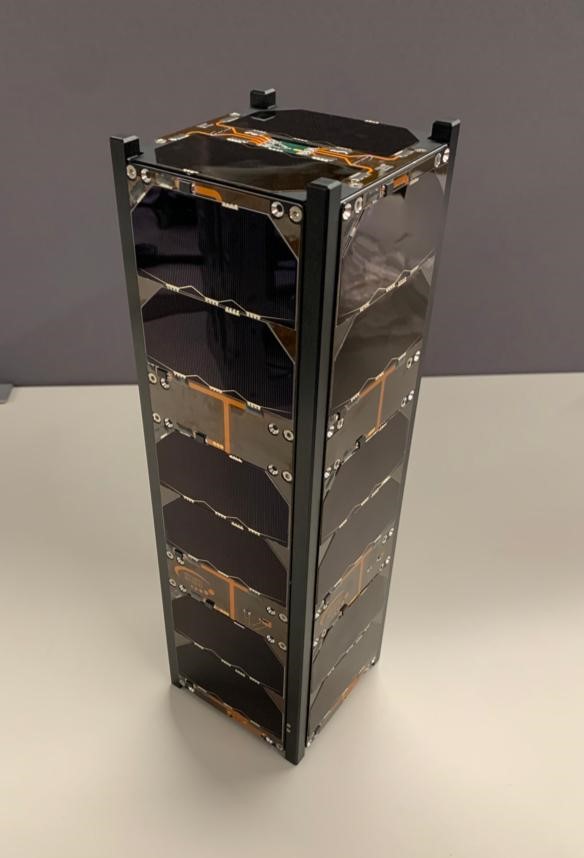
3U CubeSat carrying Cryptosat's cryptographic compute payload, providing a tamper-proof, space-based trust anchor for blockchain and secure-computing applications.
Technical specifications
- Form factor
- 3U CubeSat
- Launch date
- 2023-11-11
- Launch vehicle
- Falcon 9 (Transporter-9)
- Deployer
- D-Orbit ION-SCV 013
- Onboard compute
- 3x Crypto Card (ARM processor, hundreds of GB storage each)
- Communications
- 2x Iridium 9603 transceiver modems
- Regulatory authorization
- Germany Bundesnetzagentur (BNetzA)
- Applications
- MPC, threshold key management, verifiable randomness, zero-knowledge proof ceremonies, data security
- Mission end
- Re-entered 2025-03-29
About
Crypto3 is the third satellite in Cryptosat’s CubeSat constellation, purpose-built to provide cryptographic and blockchain trust services from orbit. It is a 3U CubeSat launched on 11 November 2023 aboard a SpaceX Falcon 9 Transporter-9 rideshare mission, deployed via a D-Orbit ION orbital transfer vehicle, and was authorized for experimental operation by Germany’s Bundesnetzagentur (BNetzA). Crypto3 carries three onboard ‘Crypto Cards’ — ARM-processor compute modules with hundreds of gigabytes of combined storage — giving it significantly more onboard compute than Cryptosat’s earlier Crypto1 and Crypto2 satellites. The satellite is fitted with a pair of Iridium 9603 transceiver modems for global communication, used to relay blockchain ledger information, cryptographic primitives such as zero-knowledge proofs, verifiable random numbers, satellite commands, and telemetry. Because a satellite in orbit cannot be physically accessed once deployed, Crypto3’s compute environment is inherently resistant to physical tampering and side-channel attacks, letting it serve as a hardware root of trust for multi-party computation (MPC), threshold key management, verifiable randomness generation, and secure key-ceremony operations for blockchain and Web3 infrastructure. Crypto3 operated in orbit until it re-entered the atmosphere on 29 March 2025.
Documentation
No public datasheet yet — request the datasheet / ICD from the supplier.