BIRDS CubeSat Programme
 Kyushu University
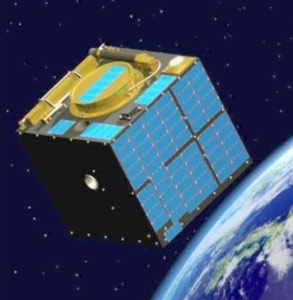
Kyushu University's global CubeSat educational initiative — 30+ 1U CubeSats built by developing nations under Kyushu mentorship and deployed from ISS (2017–2024).
Technical specifications
- Form factor
- 1U CubeSat (per satellite)
- Programme start
- 2017 (BIRDS-1)
- Deployment method
- ISS J-SSOD (JAXA Kibo module)
- Satellites built (cumulative)
- >30 (as of 2024)
- Nations represented
- >20 countries across Africa, Asia, Pacific
- BIRDS-1 (2017)
- Ghana, Mongolia, Nigeria, Bangladesh, Japan
- BIRDS-2 (2019)
- Malaysia, Bhutan, Philippines
- BIRDS-3 (2021)
- Japan, Sri Lanka, Nepal
- BIRDS-5 (2023)
- Zimbabwe, Rwanda, Uganda + others
- Lead institution
- Kyushu University LaSEINE
- Launch facilitator
- JAXA
About
The BIRDS (Joint Global Multi-Nation Birds CubeSat) programme is an educational satellite initiative led by the Laboratory of Spacecraft Environment Interaction Engineering (LaSEINE) at Kyushu University, Japan. Its goal is to enable countries with no prior satellite experience to design, build, test, and operate their own 1U CubeSat, with each satellite representing a national ‘first satellite’ milestone.
Under the BIRDS model, Kyushu University provides technical training, mentoring, facilities (vibration testing, thermal vacuum), and launch facilitation (via JAXA’s JEM Small Satellite Orbital Deployer, J-SSOD, on the ISS Kibo module). Student teams from partner nations spend one academic year at Kyushu developing their satellite, then return home to operate it.
BIRDS-1 (2017) included satellites from Ghana, Mongolia, Nigeria, Bangladesh, and Japan — with GhanaSat-1 becoming Ghana’s first satellite. BIRDS-2 (2019) added Malaysia, Bhutan, and the Philippines. BIRDS-3 (2021) included Japan, Sri Lanka, and Nepal. BIRDS-4 (2022) extended the programme with new partners. BIRDS-5 (2023) incorporated Zimbabwe, Rwanda, Uganda, and others. As of 2024, over 30 CubeSats representing more than 20 nations have been built and deployed through BIRDS, making it the world’s most prolific educational nanosatellite programme.
Each BIRDS satellite typically carries UHF/VHF radios, solar cells, EPS, OBC, and a mission-specific educational payload. Key outcome: every BIRDS nation has gained domestic space engineering capability, inspiring national space agency formation and subsequent independent satellite projects.
Documentation
No public datasheet yet — request the datasheet / ICD from the supplier.