Vega C
 Avio S.p.A.
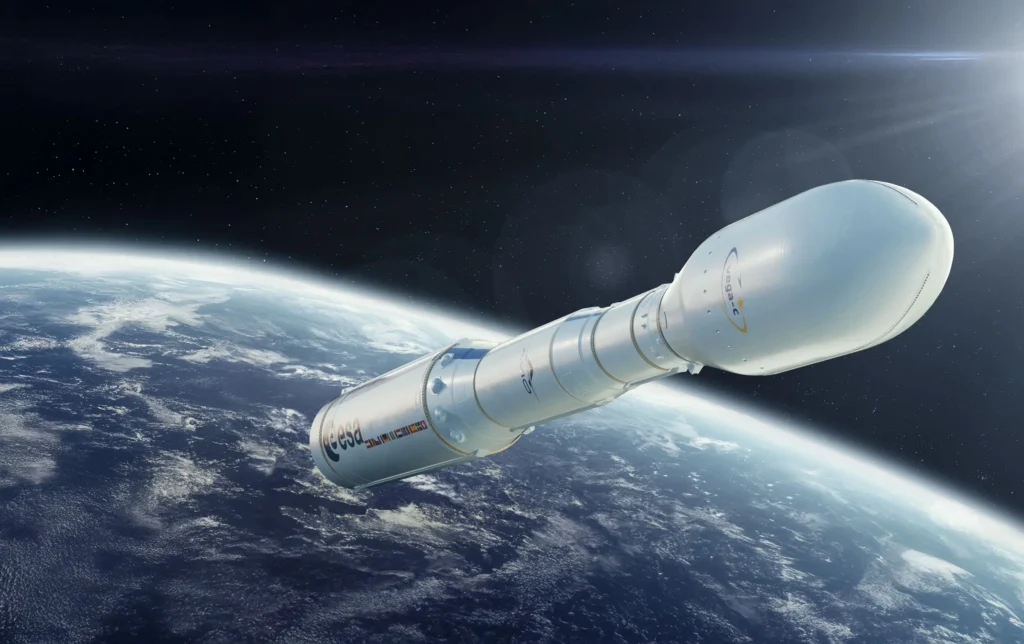
Vega C is Avio's single-body, four-stage small/medium-lift launcher, the upgraded successor to Vega, built for ESA/Arianespace to serve institutional and commercial payloads to low Earth and Sun-synchronous orbits.
Technical specifications
- Height
- ~35 m
- Liftoff mass
- ~210 tonnes
- Fairing diameter
- 3.3 m
- Configuration
- Single-body, 4 stages (3 solid + 1 liquid)
- Stage 1 - P120C
- Length 13.5 m, diameter 3.4 m, thrust 4,780 kN, ~141.4 t solid propellant
- Stage 2 - Zefiro 40
- Length 7.6 m, diameter 2.3 m, thrust 1,035 kN, ~36.1 t solid propellant
- Stage 3 - Zefiro 9
- Length 3.9 m, diameter 1.9 m, thrust 255 kN, ~10.5 t solid propellant
- Stage 4 - AVUM+
- Diameter 2 m, thrust 2.47 kN, ~737 kg propellant, liquid bipropellant module
- Payload to LEO
- 3.3 tonnes
- Payload to SSO
- 2.3 tonnes
- Payload adapters
- VESPA+R, CLESSIDRA, SSMS (rideshare)
- Flight heritage
- VV21 (2022) success; VV22 (Dec 2022) failure - Zefiro-40 nozzle chamber pressure loss, payload lost; grounded ~2 years; VV25 (Dec 2024) return-to-flight success carrying Sentinel-1C; continued operational flights since
- Launch site
- Guiana Space Centre, Kourou, French Guiana
About
Vega C (Vettore Europeo di Generazione Avanzata C) is Avio S.p.A.’s current expendable orbital launch vehicle, developed for the European Space Agency and commercialized through Arianespace (and directly by Avio since September 2024). It is a single-body rocket standing nearly 35 m tall with a liftoff mass of about 210 tonnes, comprising three solid-propellant stages plus a liquid-propellant upper module. The P120C first stage (a monolithic carbon-fibre motor also used as a booster on Ariane 6) delivers roughly 4,780 kN of thrust burning about 141 tonnes of solid propellant. The Zefiro-40 second stage burns around 36 tonnes of propellant, and the Zefiro-9 third stage burns about 10 tonnes. The AVUM+ liquid stage provides precise attitude control and orbital insertion, carrying roughly 740 kg of propellant. A new, larger 3.3 m diameter fairing roughly doubles payload volume versus the original Vega. Vega C targets the small-to-medium satellite market via payload adapters such as VESPA, CLESSIDRA and SSMS for rideshare missions. It performed its maiden flight on 13 July 2022 (VV21), a success. Its second flight, VV22 (December 2022), failed about 151 seconds after liftoff due to a progressive loss of chamber pressure in the Zefiro-40 second-stage nozzle, resulting in loss of the Pléiades Neo 5 and 6 satellites. This grounded Vega C for nearly two years while Avio redesigned and requalified the Zefiro-40 nozzle throat insert. Vega C returned to flight successfully with VV25 in December 2024, launching Copernicus Sentinel-1C, and has continued flying operationally since.
Documentation
No public datasheet yet — request the datasheet / ICD from the supplier.