Peregrine Lunar Lander
 Astrobotic Technology
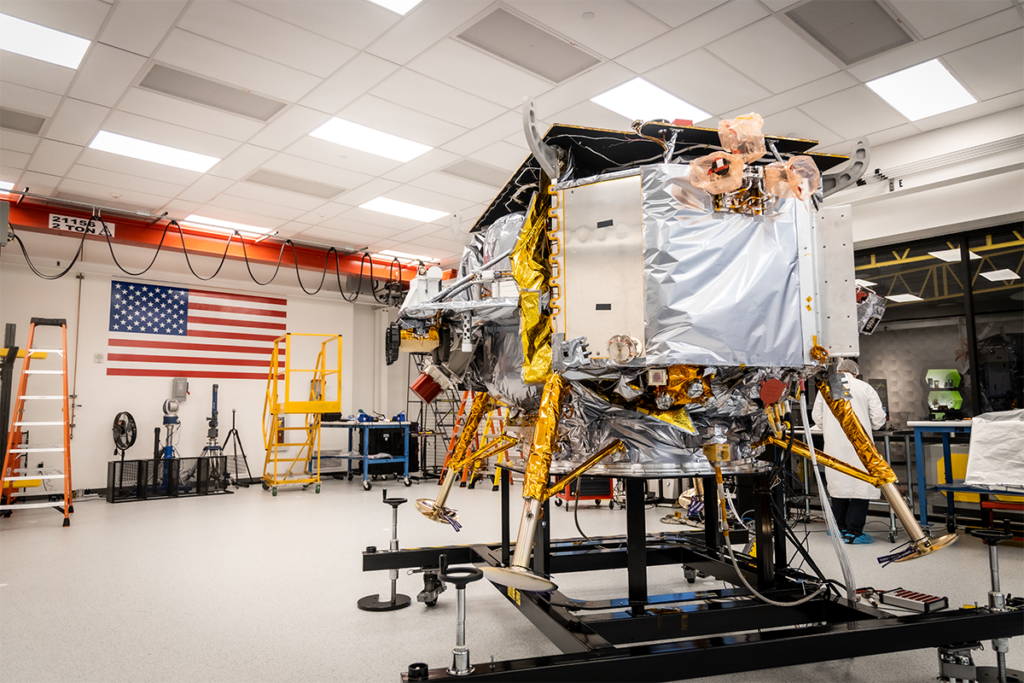
Commercial robotic lunar lander developed under NASA CLPS — flew on ULA Vulcan Centaur's inaugural launch in January 2024, delivering scientific and commercial payloads toward the lunar surface.
Technical specifications
- Mission Type
- Commercial robotic lunar lander
- Program
- NASA CLPS (Commercial Lunar Payload Services)
- Launch Vehicle
- ULA Vulcan Centaur (inaugural flight)
- Launch Date
- January 2024
- Payload Capacity
- Multi-customer aggregated payload manifest
About
Peregrine is Astrobotic’s robotic lunar lander, developed to deliver scientific instruments, technology demonstrations, and commercial payloads to the surface of the Moon under NASA’s Commercial Lunar Payload Services (CLPS) program. The lander represented one of the first American attempts at a soft lunar landing since the Apollo era and launched as the primary payload on United Launch Alliance’s inaugural Vulcan Centaur rocket in January 2024.
Peregrine was designed to carry a diverse manifest of payloads from NASA, international space agencies, universities, and commercial customers, including scientific instruments to study the lunar surface and exosphere, technology demonstrations, and small time-capsule and commemorative payloads from private customers. The mission’s payload diversity reflected Astrobotic’s business model of aggregating multiple customers onto a single lunar delivery mission to reduce individual payload costs.
During the mission, Peregrine experienced a propellant leak shortly after trans-lunar injection that prevented a planned lunar surface landing. Despite this setback, the spacecraft continued operating for approximately ten days, providing valuable operational data and payload science return before a controlled disposal reentry over the Pacific Ocean. The mission’s data informed subsequent lander development, including Astrobotic’s larger Griffin lander designed to carry NASA’s VIPER rover to the lunar south pole.
Documentation
No public datasheet yet — request the datasheet / ICD from the supplier.