

MEO optical inter-satellite data-relay network delivering LEO Earth-observation data to the ground in near real time.
WarpHub InterSat
MEO optical inter-satellite data-relay network delivering LEO Earth-observation data to the ground in near real time.
Description
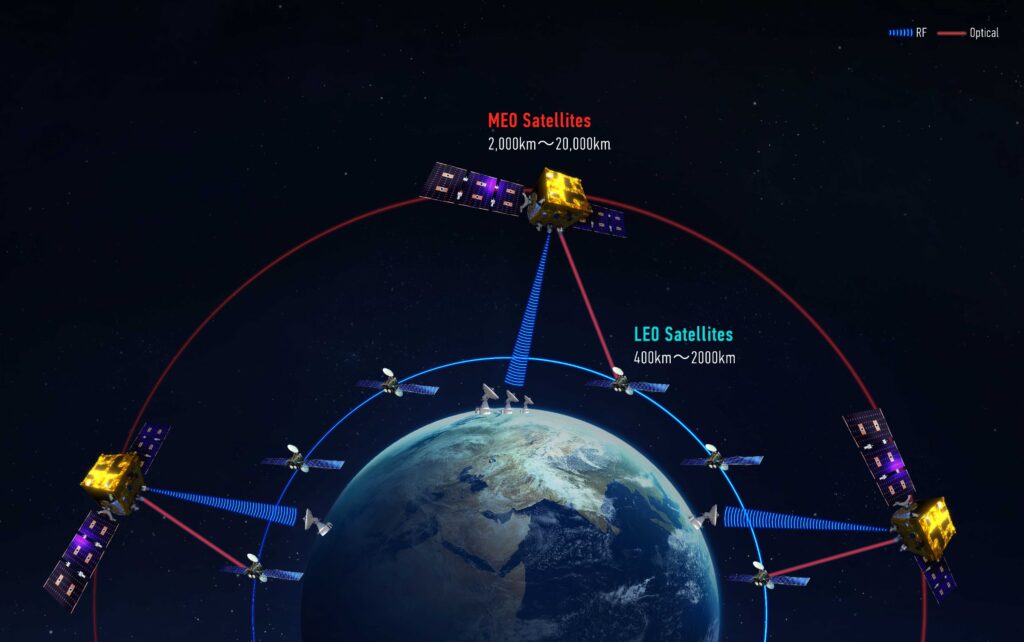
WarpHub InterSat is WARPSPACE's planned constellation of optical inter-satellite relay satellites positioned in medium Earth orbit (MEO, roughly 2,000-20,000 km altitude). Because relay satellites at this altitude stay in view of a ground station far longer than a single LEO pass, at least one of the constellation's satellites is almost always reachable, allowing LEO Earth-observation satellites equipped with a compatible optical communication terminal to relay their data continuously instead of waiting for a direct overpass of their own ground station.
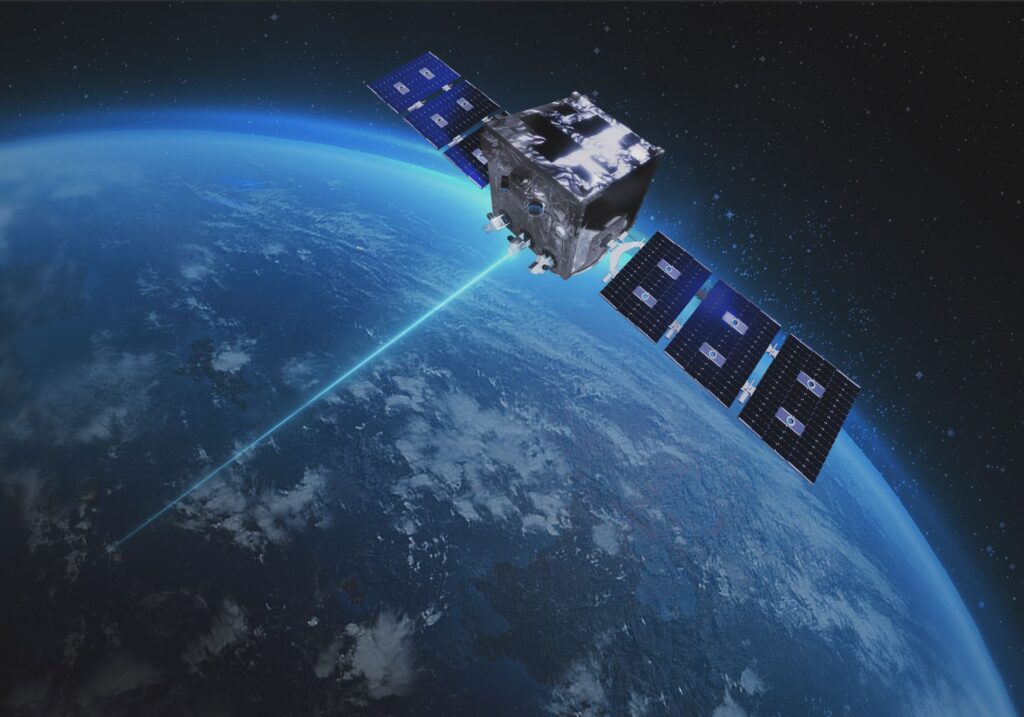
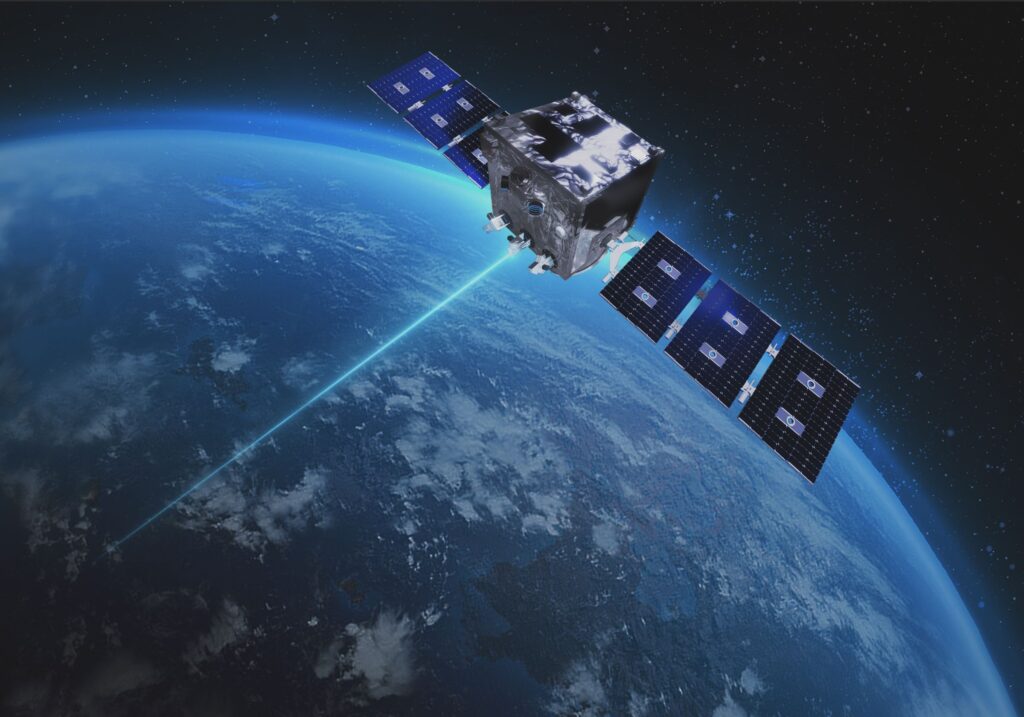
A customer LEO satellite transmits its data via laser to a WarpHub InterSat relay satellite using an internationally standardized optical communication terminal; the relay satellite then downlinks the data to WARPSPACE's ground segment, which forwards it to the end customer through a partnership with Amazon Web Services. Compared with conventional RF downlink - limited to short passes and to time-consuming international frequency coordination - the service targets delivery of customer data within 30 minutes of a request, 24 hours a day, at throughputs exceeding 1 Gbps, with high security and interoperability across multiple optical terminal standards.
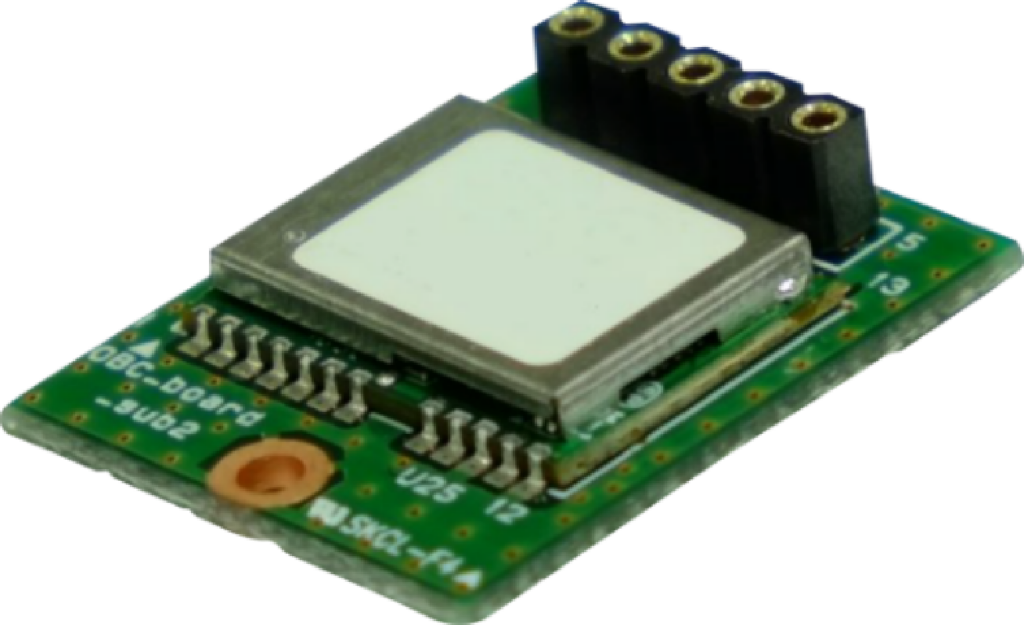
Because the relay satellites sit lower than geostationary orbit, the optical terminals required on customer satellites have comparatively low size, weight and power (SWaP) needs, making the service accessible to small LEO satellites. WARPSPACE flew an in-orbit technology demonstrator, "Nichirin," from the ISS in March 2020, and announced its first WarpHub InterSat relay satellite, "Reiho (LEIHO)," completing its preliminary design review (PDR) in mid-2023, ahead of a planned first launch. The company also offers WarpON! (WarpHub InterSat Onboarding Solutions), a bundle of hardware (the HOCSAI multi-protocol optical modem) and software (a Digital Twin System for constellation simulation) that helps Earth-observation operators integrate optical inter-satellite links in preparation for using the network.
Specifications
| Data throughput | 1 Gbps (WarpHub InterSat) vs. 500 Mbps-1 Gbps (conventional RF) |
|---|---|
| Time from request to data delivery | Within 30 minutes (WarpHub InterSat) vs. several hours to 1+ day (conventional RF) |
| Access availability | Near real-time, up to continuous (WarpHub InterSat) vs. ~10 minutes per hour (conventional RF, LEO ground-station pass) |
| Communication standard | International standard-compliant, interoperable between compatible terminals (WarpHub InterSat) vs. proprietary per-wavelength (conventional RF) |
| Security | High (WarpHub InterSat) vs. Low (conventional RF) |
| Relay satellite orbit | Medium Earth orbit (MEO), approx. 2,000-20,000 km altitude |
| Customer satellite orbit | Low Earth orbit (LEO), approx. 400-2,000 km altitude |
| Ground data delivery partner | Amazon Web Services (AWS) |
| First relay satellite | Reiho (LEIHO) - PDR completed 2023 |
| Technology demonstrator | Nichirin - deployed from ISS, March 2020 |