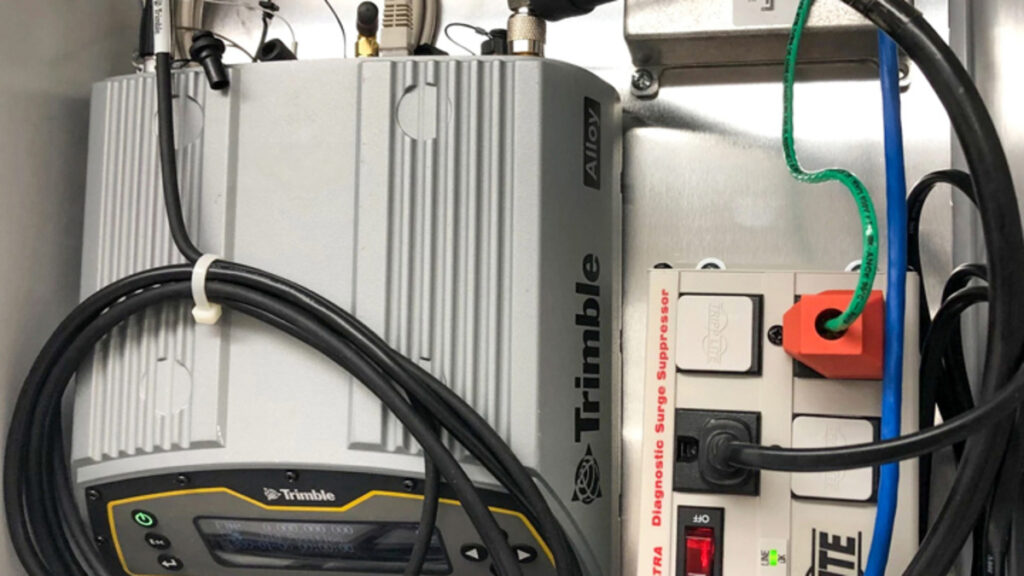

Multi-constellation GNSS reference receiver used as a Continuously Operating Reference Station (CORS), including in International GNSS Service (IGS) geodetic stations that support satellite orbit and clock determination.
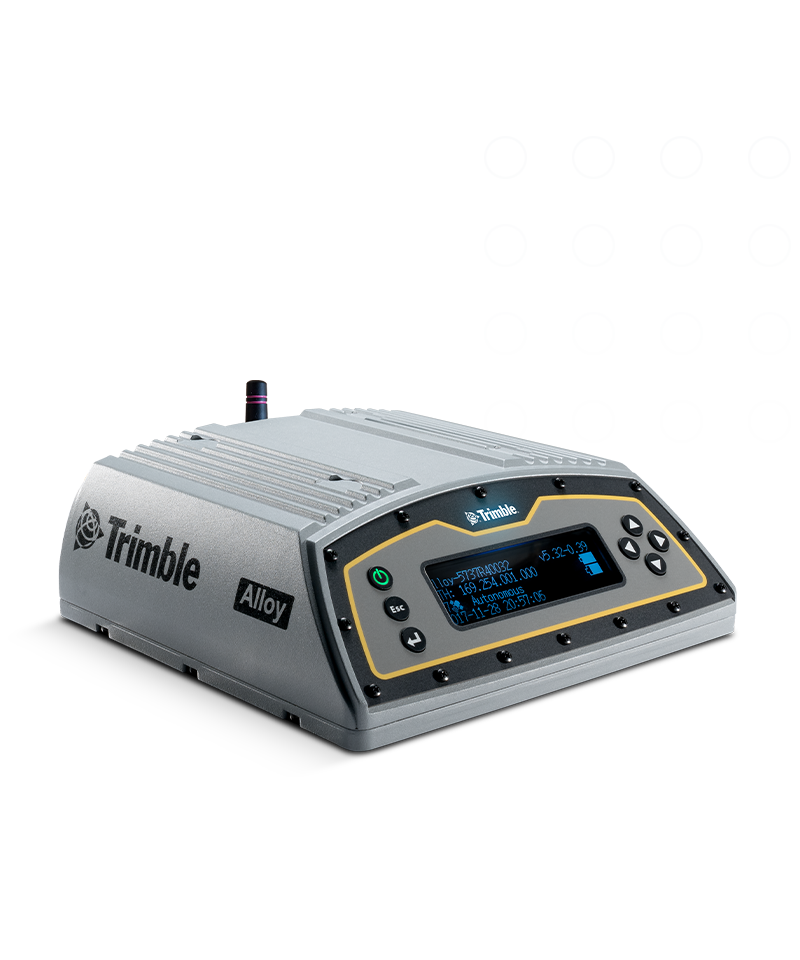
Trimble Alloy GNSS Reference Receiver
Multi-constellation GNSS reference receiver used as a Continuously Operating Reference Station (CORS), including in International GNSS Service (IGS) geodetic stations that support satellite orbit and clock determination.
Description
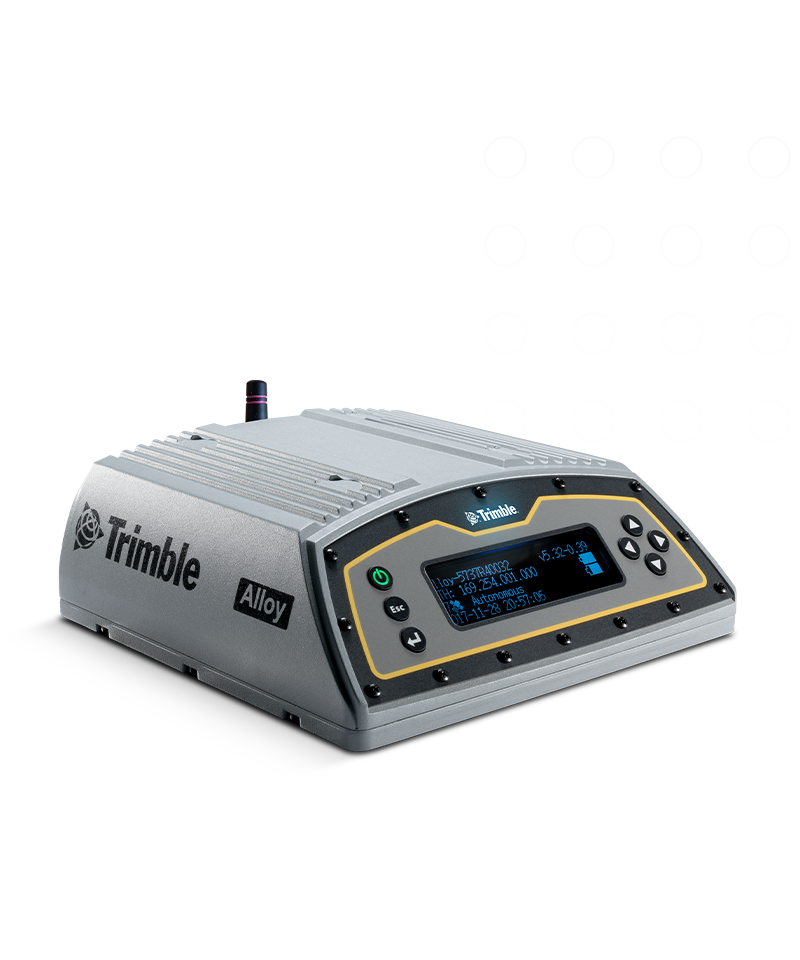
The Trimble Alloy is a rugged, IP68-rated GNSS reference receiver built around a dual Trimble Maxwell 7 chipset (672 channels), tracking GPS, GLONASS, Galileo, BeiDou, QZSS, IRNSS and SBAS signals. It is deployed worldwide as a Continuously Operating Reference Station (CORS) for real-time and post-processed networks, and is used at multiple stations of the International GNSS Service (IGS) geodetic network, where continuous ground-based GNSS tracking supports precise satellite orbit determination, clock modeling and reference-frame maintenance. Trimble does not market Alloy as spacecraft-qualified hardware; its role in the space sector is strictly as ground-segment infrastructure supporting satellite navigation systems, not as flight/onboard equipment.
Specifications
| GNSS chipset | Dual Trimble Maxwell 7, 672 channels |
|---|---|
| Constellations/signals | GPS L1/L2/L2C/L5; GLONASS L1/L2/L3; Galileo E1/E5a/E5b/AltBOC/E6; BeiDou B1/B2/B3; QZSS L1/L1C/L2C/L5/LEX; IRNSS L5/S; SBAS L1/L5 |
| Carrier phase precision | <1 mm in 1 Hz bandwidth |
| Static positioning accuracy (horizontal) | 3 mm + 0.1 ppm RMS |
| Static positioning accuracy (vertical) | 3.5 mm + 0.4 ppm RMS |
| RTK accuracy, single baseline <30 km (horizontal) | 8 mm + 1 ppm RMS |
| RTK accuracy, single baseline <30 km (vertical) | 15 mm + 1 ppm RMS |
| Networked RTK initialization time | typically <10 s, >99.9% reliability |
| Correction formats | CMR, CMR+, CMRx, RTX, RTCM 2.x/3.x, GAGAN, SDCM |
| Observable formats | RT17, RT27, BINEX, RTCM 3.x |
| Position/status output | NMEA-0183 v2.30, GSOF, up to 100 Hz |
| Timing reference | 10 MHz external frequency input, 1 PPS output, event input |
| Communication interfaces | 2x DB9 serial, 2x 7-pin Lemo, USB Mini-B, Ethernet RJ45 (PoE 802.3af/at), WiFi 802.11 b/g, Bluetooth (3 simultaneous connections) |
| Onboard storage | up to 24 GB internal, >1 TB external (USB), 12 concurrent logging sessions |
| Max data logging rate | 100 Hz (187 Hz combined) |
| File formats | T02, T04, BINEX, RINEX v2.x/3.0x, KML/KMZ |
| Power input | 9.5-28 V DC or PoE; dual hot-swappable 7.4V/7800 mAh Li-Ion batteries, up to 15 h runtime |
| Power consumption | 3.8 W or higher depending on configuration |
| Dimensions (L x W x H) | 26.5 cm x 13.0 cm x 5.5 cm |
| Weight | 1.75 kg |
| Operating temperature | -40 C to +65 C |
| Storage temperature | -40 C to +80 C |
| Ingress protection | IP68 (1 m submersion, 1 hr) |
| Shock (operating) | 40g per MIL-STD-810G Table 5.16.6-VII |
| Regulatory compliance | FCC Part 15 Class B, CISPR 32/24, RED CE, RCM, UN38.3, IEC 62133, RoHS |