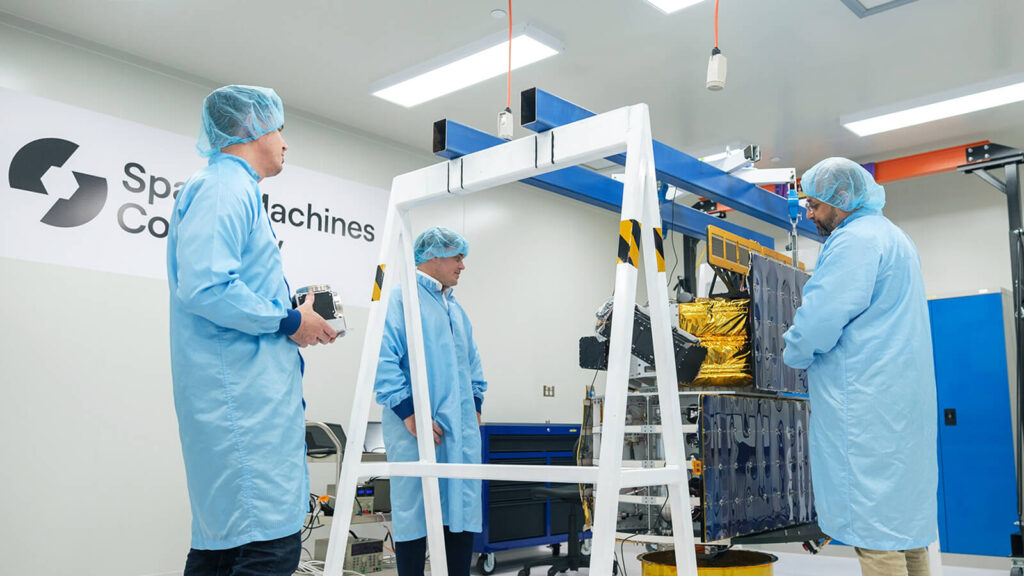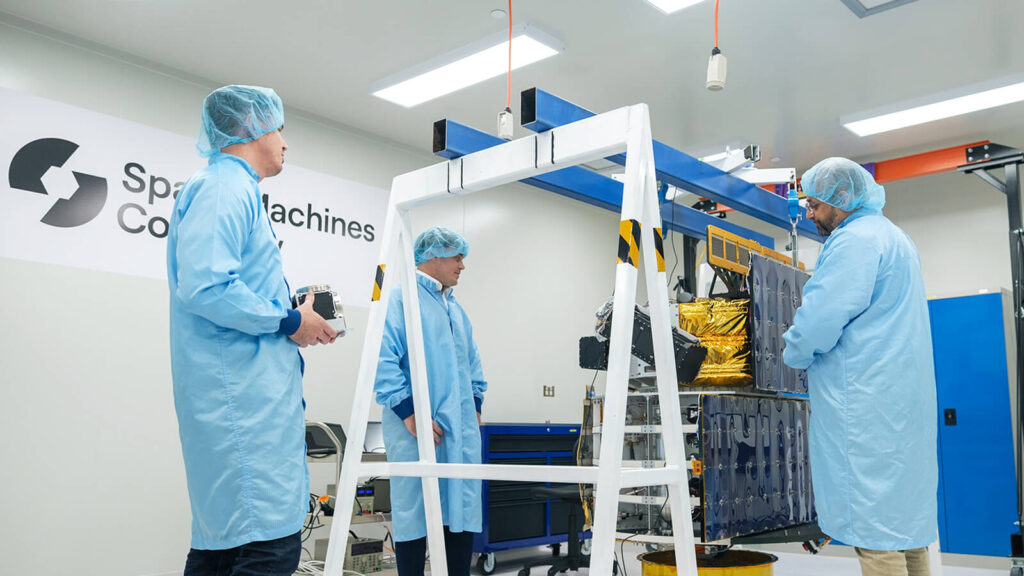

Australia's first commercially built autonomous OTV — 270 kg, 500 kg payload, in-space servicing, last-mile delivery, debris removal across LEO through cislunar.
Optimus OTV (Orbital Transfer Vehicle)
Australia's first commercially built autonomous OTV — 270 kg, 500 kg payload, in-space servicing, last-mile delivery, debris removal across LEO through cislunar.
Description
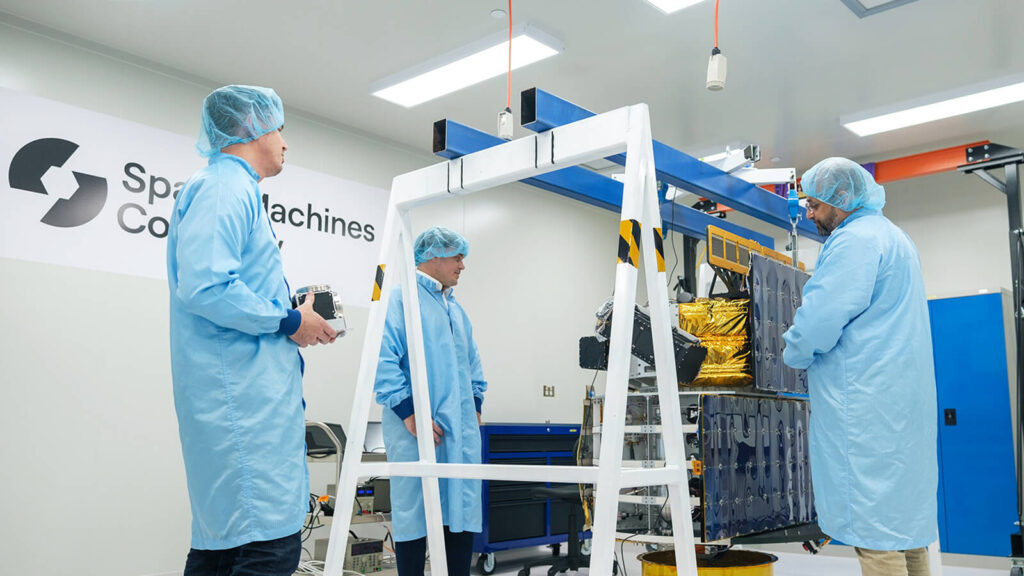
The Optimus OTV is Space Machines Company's flagship autonomous Orbital Transfer Vehicle, designed for last-mile payload delivery, satellite inspection, orbit raising, debris removal, and in-space servicing across LEO, MEO, GEO, and cislunar orbits. At 270 kg, it was Australia's largest privately built satellite at the time of its March 2024 launch on SpaceX Transporter-10.
Optimus integrates SMC's in-house Scintilla propulsion engine — a metal 3D-printed monopropellant thruster delivering 50 N of thrust with 40+ demonstrated restarts — and a full avionics suite including the Advanced Navigation Boreas X90 digital fibre-optic gyroscope INS for precision navigation. The vehicle supports CubeSat deployers and can accommodate payloads up to 500 kg. The second-generation Optimus 2 (~450 kg) is manifested for 2026 on NewSpace India's SSLV for the Space MAITRI space domain awareness mission.
Specifications
| Mass | 270 kg (Gen 1); ~450 kg (Gen 2 Optimus 2) |
|---|---|
| Payload capacity | Up to 500 kg |
| Propulsion | Scintilla monopropellant thruster (3D-printed, in-house) |
| Thrust | 50 N |
| Propulsion efficiency | 92% |
| Scintilla restarts demonstrated | 40+ |
| Cumulative test time | 1,200+ seconds |
| Navigation | Advanced Navigation Boreas X90 digital FOG INS |
| Orbit types | LEO, MEO, GEO, GTO, Cislunar, Interplanetary |
| First launch | March 2024, SpaceX Transporter-10, Vandenberg SLC-4E |
| TRL | 9 (Gen 1 flight-demonstrated) |