
16U CubeSat microsatellite platform for Earth observation and communications, with GaAs solar panels and optional propulsion; InnoSat16 launched July 2025.
Geoscan 16U CubeSat Platform (InnoSat16)
16U CubeSat microsatellite platform for Earth observation and communications, with GaAs solar panels and optional propulsion; InnoSat16 launched July 2025.
Description
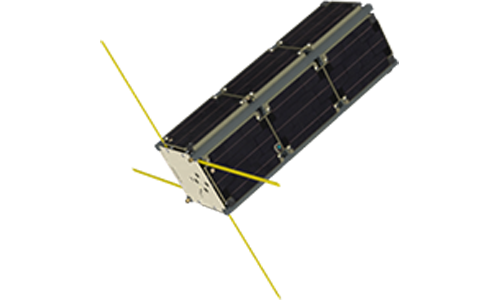
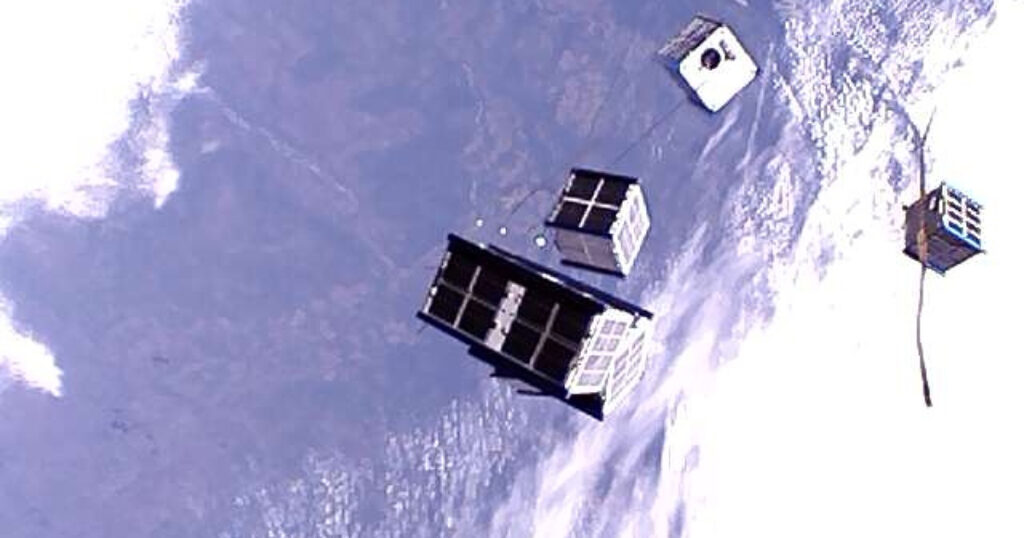
The Geoscan 16U is a microsatellite platform in the CubeSat 16U form factor developed for Earth remote sensing and communications missions. InnoSat16, the first 16U CubeSat built by Geoscan, was launched from the Vostochny Cosmodrome into a sun-synchronous orbit at approximately 500 km altitude on July 25, 2025, carrying a panchromatic camera from JSC NPO Lepton with 2.5 m/pixel ground resolution.
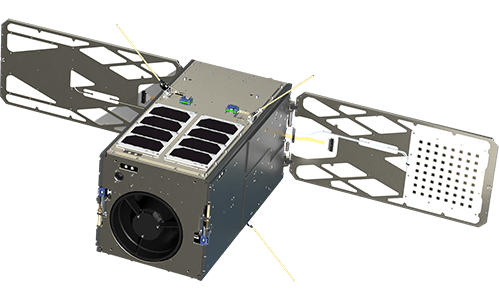
For Earth observation, the platform accommodates high-resolution cameras delivering nadir ground sampling distance of up to 2.5 m from 500 km altitude and a swath width of 12 km. Camera options include panchromatic, multispectral (including near-infrared), and hyperspectral. For communications missions, the available internal volume supports high-power transceiver installations for narrow or wide bandwidth operation.
Solar panels use gallium arsenide photovoltaic cells, which provide more than 50% higher average power than silicon cells due to superior radiation and temperature resistance. The platform includes a full attitude determination and control system with sensors and actuators, enabling precise pointing for high-quality imaging. A high-speed X-band transmitter (250 Mbps) is installed for rapid data downlink. Upon request, the platform can be equipped with a propulsion system extending operational lifespan to up to 5 years.
Geoscan manufactures the platform in a cleanroom certified to ISO 7 (GOST R ISO 14644-1-2017), with approximately 30 m² of controlled-environment assembly space.
Specifications
| Assembled mass (without payload) | 20 kg |
|---|---|
| Maximum total mass with payload | 32 kg |
| Dimensions folded | 251.3×251.3×454 mm (251.3×251.3×512 mm with Tuna Can) |
| Power bus voltage | 10.5–12.6 V |
| On-board bus interface | 2×CAN, UART |
| Mass storage capacity | 13×FRAM 8 Mbit, 1×MRAM 16 Mbit, 3×NOR Flash 512 Mbit, 2×SPI NOR 2 Gbit |
| Solar panel type | Gallium arsenide |
| Generated peak power | 45 W |
| Battery type | 2×Li-Ion 3P3S 10500 mAh |
| Battery capacity | 2×120 W·h |
| Downlink data rate | 250 Mbps (X-band transmitter) |
| Earth observation resolution | Up to 2.5 m GSD from 500 km |
| Earth observation swath | 12 km |
| Target orbit | LEO 400–600 km |
| Cleanroom class | ISO 7 (GOST R ISO 14644-1-2017) |
| Flight heritage | InnoSat16 launched July 25, 2025, Vostochny Cosmodrome, SSO 500 km |
| Optional propulsion | Available on request; extends lifetime to 5 years |