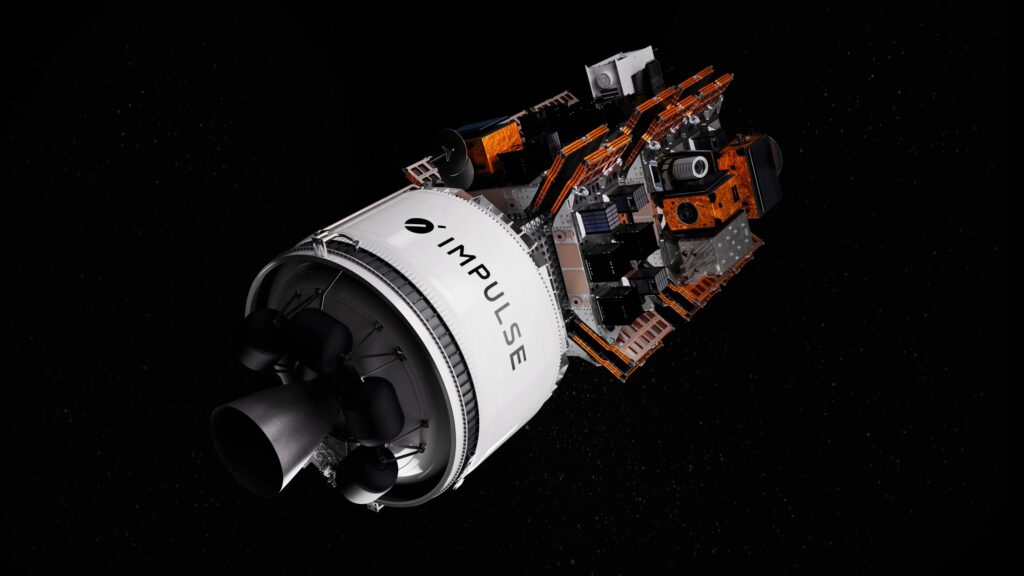

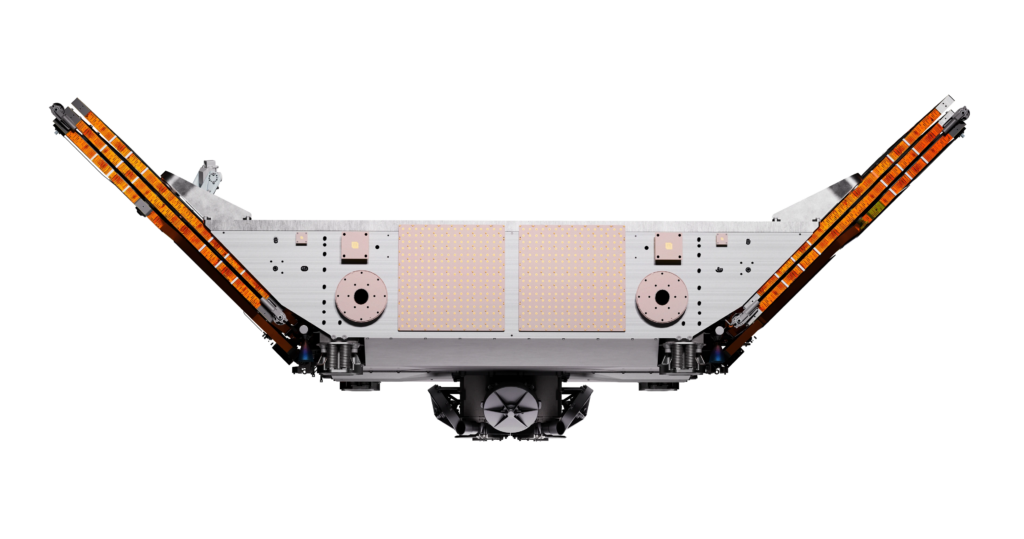
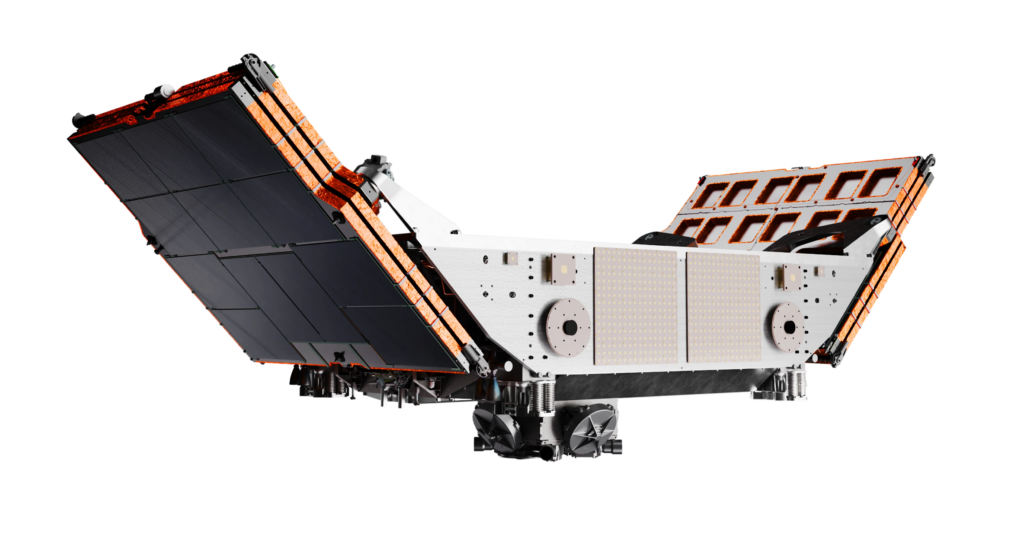
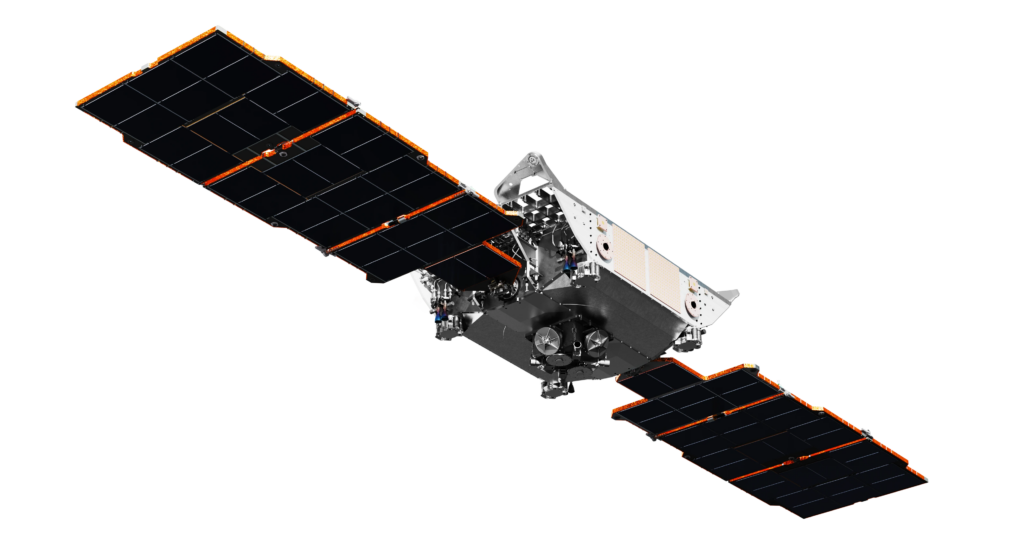
Mira is Impulse Space's flight-proven orbital transfer vehicle that provides precise, on-demand payload hosting and last-mile delivery across LEO, MEO, GEO, and cislunar space.
Mira
Mira is Impulse Space's flight-proven orbital transfer vehicle that provides precise, on-demand payload hosting and last-mile delivery across LEO, MEO, GEO, and cislunar space.
Description
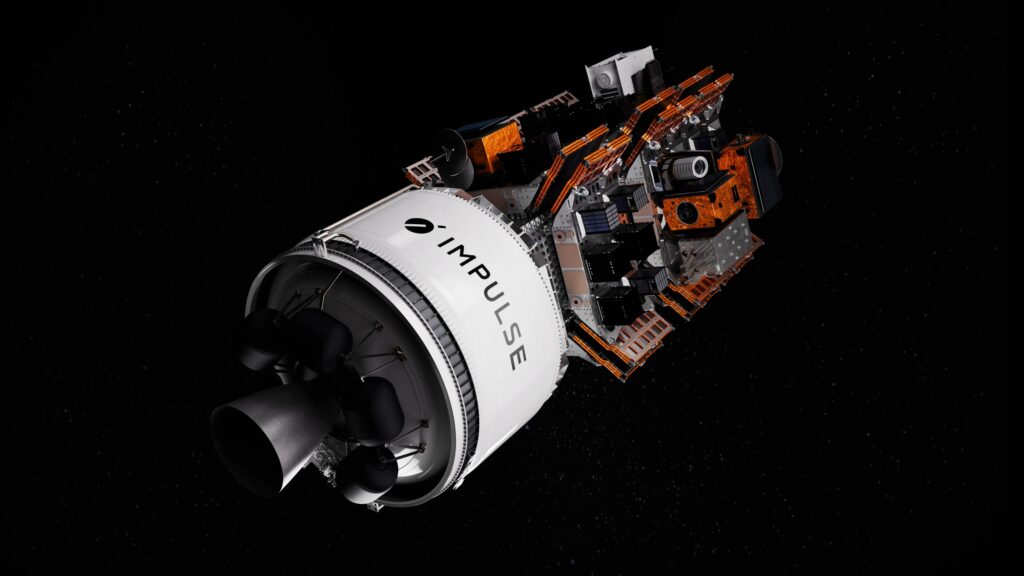
Mira is an in-space orbital transfer vehicle developed by Impulse Space, designed as a highly maneuverable last-mile delivery platform rather than a launch vehicle. It uses a non-toxic, storable bipropellant propulsion system (nitrous oxide and ethane) fed by eight Saiph thrusters operating in four pairs, supplemented by 20 cold-gas RCS thrusters and 4 reaction wheels for fine attitude control. Mira can carry payloads up to 300 kg with delta-v ranging from about 550-900 m/s depending on payload mass, and offers a payload volume greater than 1 cubic meter, pointing accuracy under 10 arcseconds, and an operational lifetime of up to 5 years including in GEO. It targets national security, government, and commercial customers needing rapid, flexible deployment and orbit-raising services beyond what a rocket's upper stage alone provides. Mira first flew on the LEO Express-1 mission in November 2023, demonstrating a 150 km orbit raise in roughly 75 seconds; it flew again on LEO Express-2 in January 2025 with enhanced technology, and has since completed a third mission. In 2025 Impulse Space announced an upgraded Mira design with ~20% more thrust and ~25% more delta-v.
Specifications
| Propulsion type | Non-toxic bipropellant (nitrous oxide/ethane), 8x Saiph thrusters in 4 pairs |
|---|---|
| Thrust | 27 N per thruster, ~216 N total (upgraded 2025 design) |
| Specific impulse | 290 s |
| Delta-v | ~550 m/s with 300 kg payload up to ~900 m/s with 100 kg payload |
| Payload capacity | Up to 300 kg |
| Payload volume | >1 m3 |
| Pointing accuracy | <10 arcseconds (1-sigma) |
| Attitude control | 4 reaction wheels + 20 cold-gas RCS thrusters |
| Mission lifetime | Up to 5 years, including GEO |
| Operational orbits | LEO, MEO, GEO, cislunar, and beyond |
| Flight heritage | 3 missions flown: LEO Express-1 (Nov 2023, first flight, 150 km orbit raise in 75 seconds), LEO Express-2 (Jan 2025), and a third mission (2025) |