Centauri is Fleet Space Technologies' family of low Earth orbit nanosatellites that deliver IoT/M2M connectivity and act as the space-based data relay backbone for the company's ExoSphere mineral exploration platform.
Centauri
Centauri is Fleet Space Technologies' family of low Earth orbit nanosatellites that deliver IoT/M2M connectivity and act as the space-based data relay backbone for the company's ExoSphere mineral exploration platform.
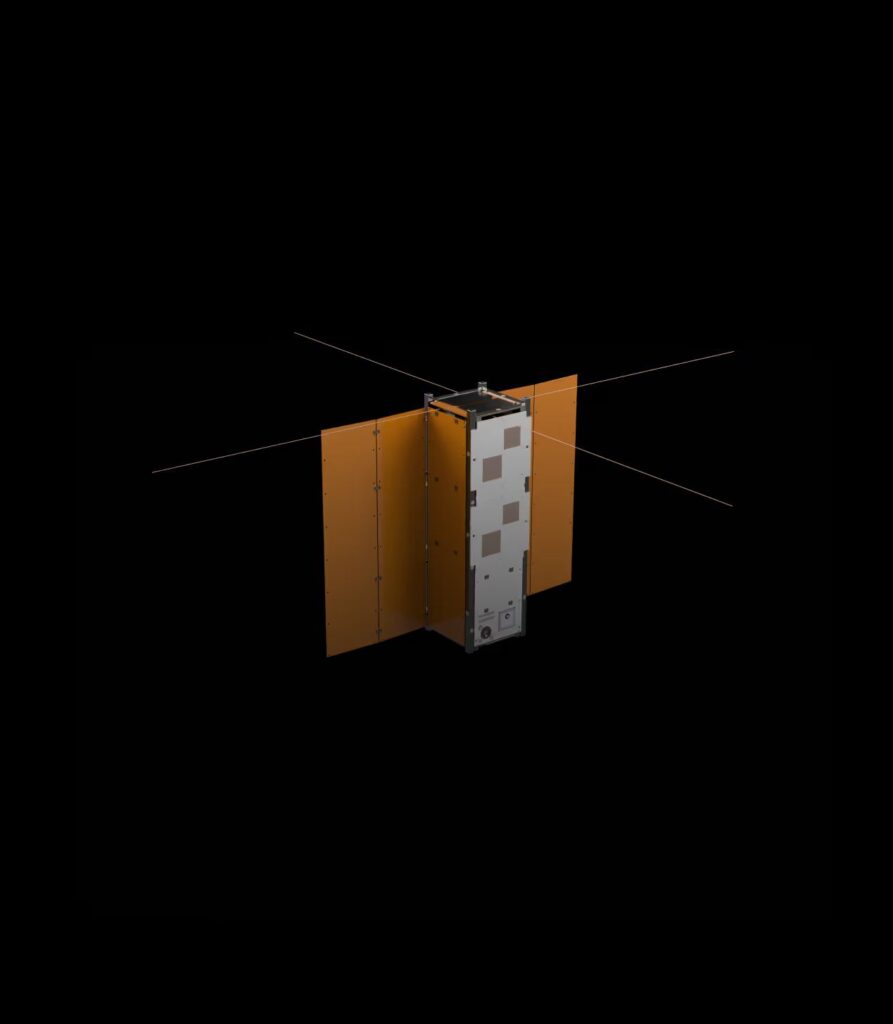
Description
Centauri is a series of nanosatellites developed by Adelaide-based Fleet Space Technologies to provide low-latency, low-power connectivity for IoT and machine-to-machine devices in remote regions, and to relay seismic and telemetry data captured by the company's ExoSphere mineral exploration system. Early Centauri satellites (Centauri 1 & 2, launched 2018) were 3U CubeSats; Centauri 3 (2021) and Centauri 4 (2021, the world's smallest voice-enabled satellite as of March 2024) were built on a 6U CubeSat bus weighing under 10 kg, developed in collaboration with nanosatellite manufacturer Tyvak. Centauri 5 and 6 introduced advanced beamforming and the world's first 3D-printed patch antennas. Newer satellites, Centauri 6 through 9, moved to a larger 12U CubeSat bus weighing approximately 25 kg, offering enhanced uplink capacity and radiation shielding, operating in a 550-600 km altitude, 45-degree inclination orbit. The satellites form part of Fleet Space's planned 140-satellite constellation targeting global IoT connectivity for the energy, utilities, and resources sectors, with over 50 mineral exploration companies relying on the Centauri-enabled ExoSphere platform.
Specifications
| Form factor (Centauri 1 & 2) | 3U CubeSat |
|---|---|
| Form factor (Centauri 3 & 4) | 6U CubeSat, <10 kg |
| Form factor (Centauri 6-9) | 12U CubeSat, ~25 kg |
| Orbit altitude | 550-600 km |
| Orbit inclination | 45 degrees |
| Antenna technology | 3D-printed patch antennas with advanced beamforming (Centauri 5 onward) |
| Special capability | World's smallest voice-enabled satellite (Centauri 4, as of March 2024) |
| Planned constellation size | 140 satellites |
| Flight heritage | Centauri 1 & 2 (2018); Centauri 3 (Mar 2021); Centauri 4 (Jun 2021); Centauri 5 (May 2022); Centauri 6 (Apr 2024, Bandwagon-1); Centauri 7 & 8 (SpaceX Transporter-12) |