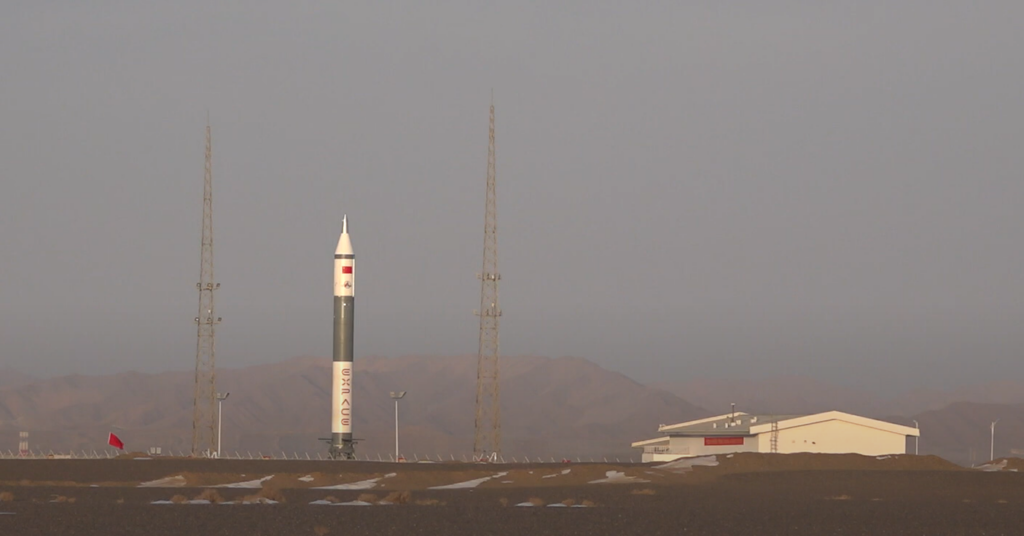

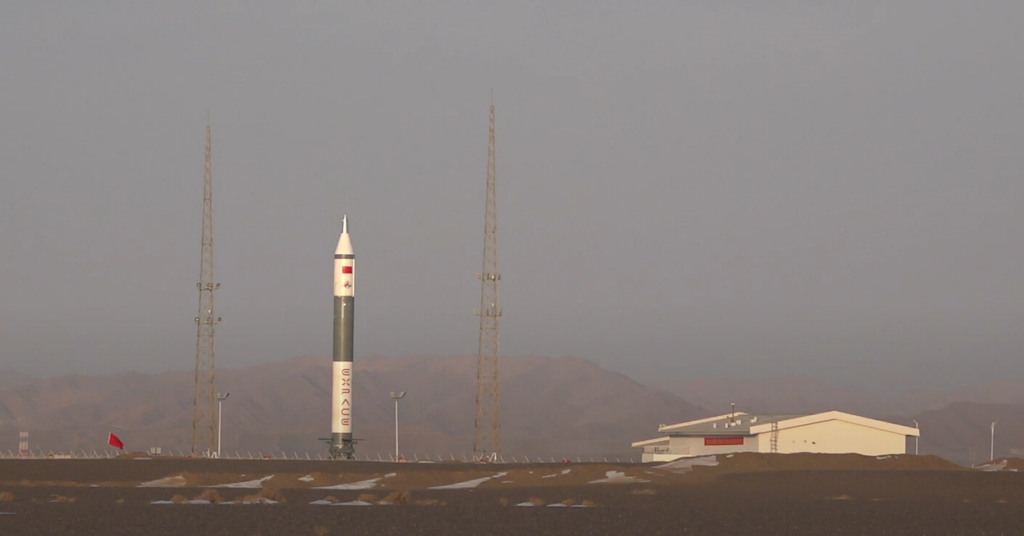
Kuaizhou-1A is a small, quick-reaction solid-fuel launch vehicle built by CASIC's ExPace to loft light satellites to low Earth and sun-synchronous orbit from mobile transporter-erector launchers.
Kuaizhou-1A
Kuaizhou-1A is a small, quick-reaction solid-fuel launch vehicle built by CASIC's ExPace to loft light satellites to low Earth and sun-synchronous orbit from mobile transporter-erector launchers.
Description
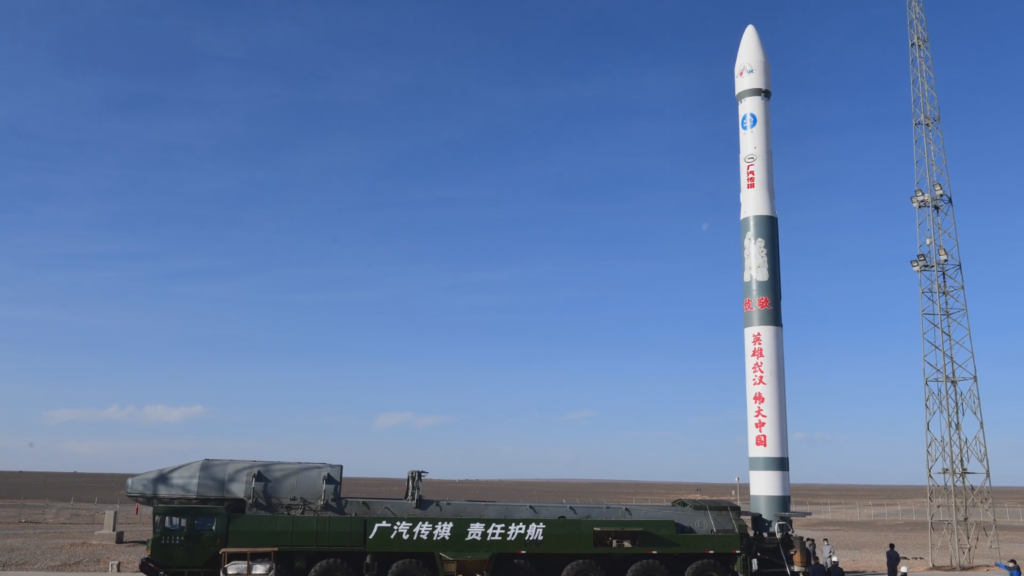
Kuaizhou-1A is a general-purpose small-lift launch vehicle developed by China Aerospace Science and Industry Corporation (CASIC) and commercialized by its Wuhan-based subsidiary ExPace Technology Co., Ltd. It uses three solid-propellant stages topped by a small liquid-propellant fourth stage for fine orbit insertion, and it launches from a road-mobile transporter-erector-launcher rather than a fixed pad, enabling short call-up times and rapid, low-cost access to space. Overall length is roughly 19.4-20 m with a maximum body diameter of about 1.4 m and a liftoff mass near 30 tonnes. It can deliver on the order of 300-400 kg to a 500 km LEO or about 200-250 kg to a sun-synchronous orbit, with a 2024-debuted enhanced version raising LEO capacity toward 450 kg. Kuaizhou-1A entered commercial service with its first launch on 9 January 2017 and has become one of China's most frequently flown small launch vehicles, primarily deploying Jilin-1 Earth-observation satellites, Tianqi IoT/data-relay satellites, and international customer satellites from the Jiuquan, Taiyuan, and Xichang satellite launch centers.
Specifications
| Stages | 3 solid-propellant stages plus a liquid-propellant fourth-stage orbital adjustment module |
|---|---|
| Length | ~19.4-20 m |
| Diameter | 1.4 m (stages 1-2); 1.2 m (stages 3-4); fairing up to 1.8 m |
| Liftoff mass | ~30 tonnes |
| Payload to LEO (500 km) | ~300-400 kg (baseline); up to ~450 kg on enhanced variant |
| Payload to SSO (500 km) | ~250-260 kg |
| Launch mode | Mobile transporter-erector-launcher, no fixed launch pad required |
| Launch sites | Jiuquan, Taiyuan, and Xichang Satellite Launch Centers |
| Flight heritage | First flight 9 January 2017; approximately 30+ orbital launches as of mid-2026 with 3 known failures (Sep 2020, Dec 2021, Mar 2025), success rate in the low-to-mid 90% range |