BlackSky's Gen-3 is a very high-resolution Earth-observation satellite delivering 35 cm imagery and near-real-time intelligence, built for rapid tasking and AI-enabled object detection for defense and intelligence customers.
Gen-3
BlackSky's Gen-3 is a very high-resolution Earth-observation satellite delivering 35 cm imagery and near-real-time intelligence, built for rapid tasking and AI-enabled object detection for defense and intelligence customers.
Description
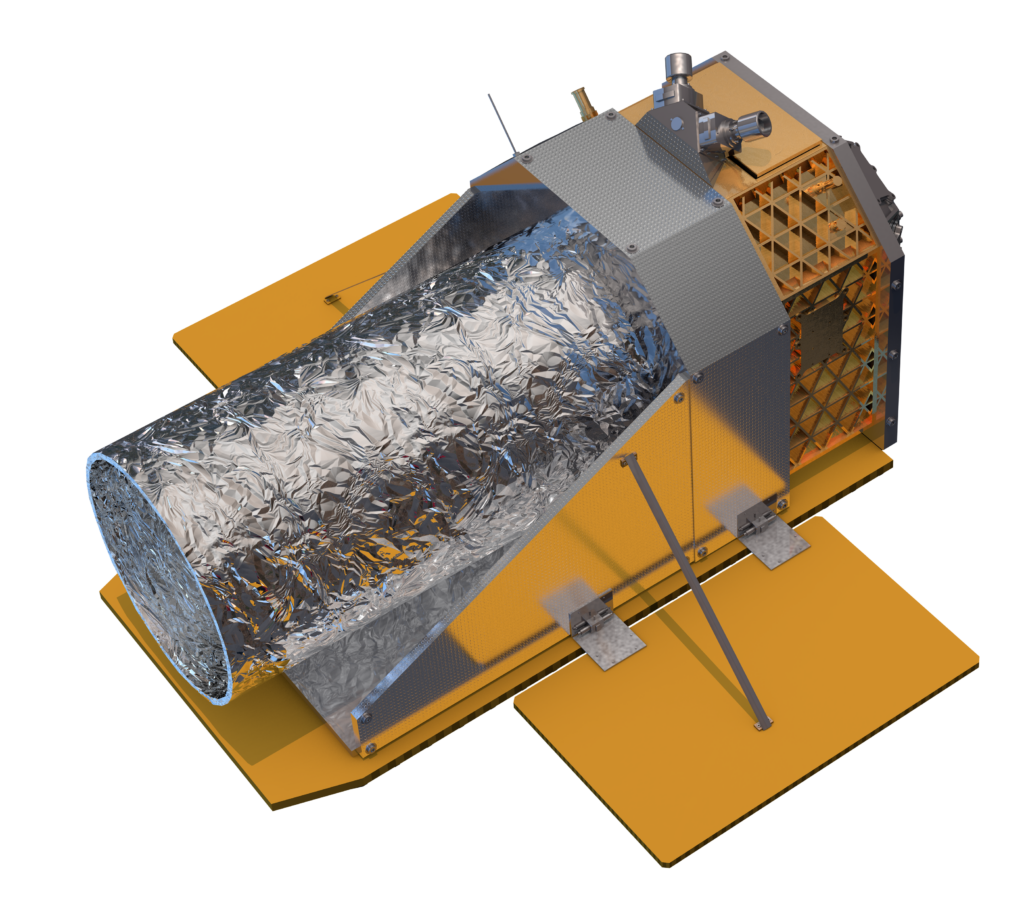
BlackSky's Gen-3 is the company's next-generation, high-resolution Earth-observation satellite platform, built in-house to succeed the smaller Gen-2 microsatellites. Gen-3 spacecraft combine very high-resolution visible imaging at a native 35 cm ground sample distance with short-wave infrared sensing for nighttime, low-light, and adverse-weather collection. Equipped with agile attitude control, accelerated X/S-band and UHF communications, and AI-enabled onboard analytics for automatic detection and classification of vehicles, aircraft, and vessels, Gen-3 satellites are designed to deliver actionable intelligence in as little as 60 minutes from tasking to delivery once the constellation reaches full operating capacity of 16 satellites. Operating in mid-inclined orbits with a design life of 5+ years, Gen-3 primarily serves defense, intelligence, and national security customers, as well as commercial markets such as maritime monitoring, infrastructure, and disaster response. As of mid-2026, four Gen-3 satellites (Global 31 through Global 34) have launched aboard Rocket Lab Electron rockets from New Zealand between February 2025 and March 2026, with additional satellites planned to grow the constellation toward its full 16-satellite capacity.
Specifications
| Best resolution - Visible | 35 cm |
|---|---|
| Best resolution - Short-wave infrared | 1.2 m |
| Revisit rate (at full capacity of 16 satellites) | 60 minutes |
| Minimum scene size - Visible | 18 km² |
| Geolocation accuracy | <10 m CE90 |
| Orbit | Mid-inclined orbit, collecting between 60° N and 60° S |
| Communications | X-band primary downlink; S-band primary uplink; UHF backup |
| Design life | 5+ years |
| Analytics | Onboard AI object detection (vehicles, aircraft, vessels) |
| Flight heritage / constellation size | 4 Gen-3 satellites launched as of mid-2026 (Global 31-34); full operating capacity target of 16 satellites; all launched via Rocket Lab Electron from New Zealand between Feb 2025 and Mar 2026 |